What to Eat in Modena: A Food Lover's Guide
FNFrancesco NoliThe short answer
Modena is one of Italy's great food capitals: hand-rolled tortellini in broth, gnocco fritto and tigelle with cured meats, Parmigiano Reggiano and Traditional Balsamic Vinegar PDO, zampone and a dry, sparkling Lambrusco. The delicious heart is the Albinelli Market, and you eat well everywhere, from the neighbourhood trattoria to Massimo Bottura's Osteria Francescana.
What to eat in Modena: tortellini in broth, gnocco fritto and tigelle, Parmigiano and balsamic, zampone and Lambrusco — plus the Albinelli Market and where to eat.
In Modena, food isn't a detail: it's identity. This is one of Italy's great gastronomic capitals — the land that gave the world the tortellino, Parmigiano Reggiano and balsamic vinegar, and where even the humblest trattoria cooks the way it should. Eating here is half the trip, and many of our guests plan their days around a market visit, a long lunch and a tasting in the hills. This is the full guide to the flavours we share with the people who stay with us: what to try, where to buy it, where to sit down to eat, and how to read a Modenese menu like a local.
A quick word on where Modena sits (for first-time visitors)
If you're coming from abroad, Modena is easy to reach and ideally placed for a food-led break. It lies in Emilia-Romagna, in northern Italy, on the historic Via Emilia and on the main Bologna–Milan railway line. From Bologna it's about 30 minutes by regional train; Bologna Airport (BLQ) is roughly 54 minutes away door-to-station; Florence is about an hour by high-speed train, Milan around an hour, and Rome about two and a half hours. The historic centre is a ZTL (limited-traffic zone) monitored by cameras, so if you drive, park outside it and walk — the station is about a 10-minute walk from the heart of the old town, and everything in this guide is within strolling distance once you arrive. That compactness is the point: in Modena you can have a coffee in a 1931 market hall, lunch on hand-rolled pasta, an afternoon among balsamic barrels in the countryside, and a glass of Lambrusco at sunset, all without rushing.
First courses: tortellini and tortelloni
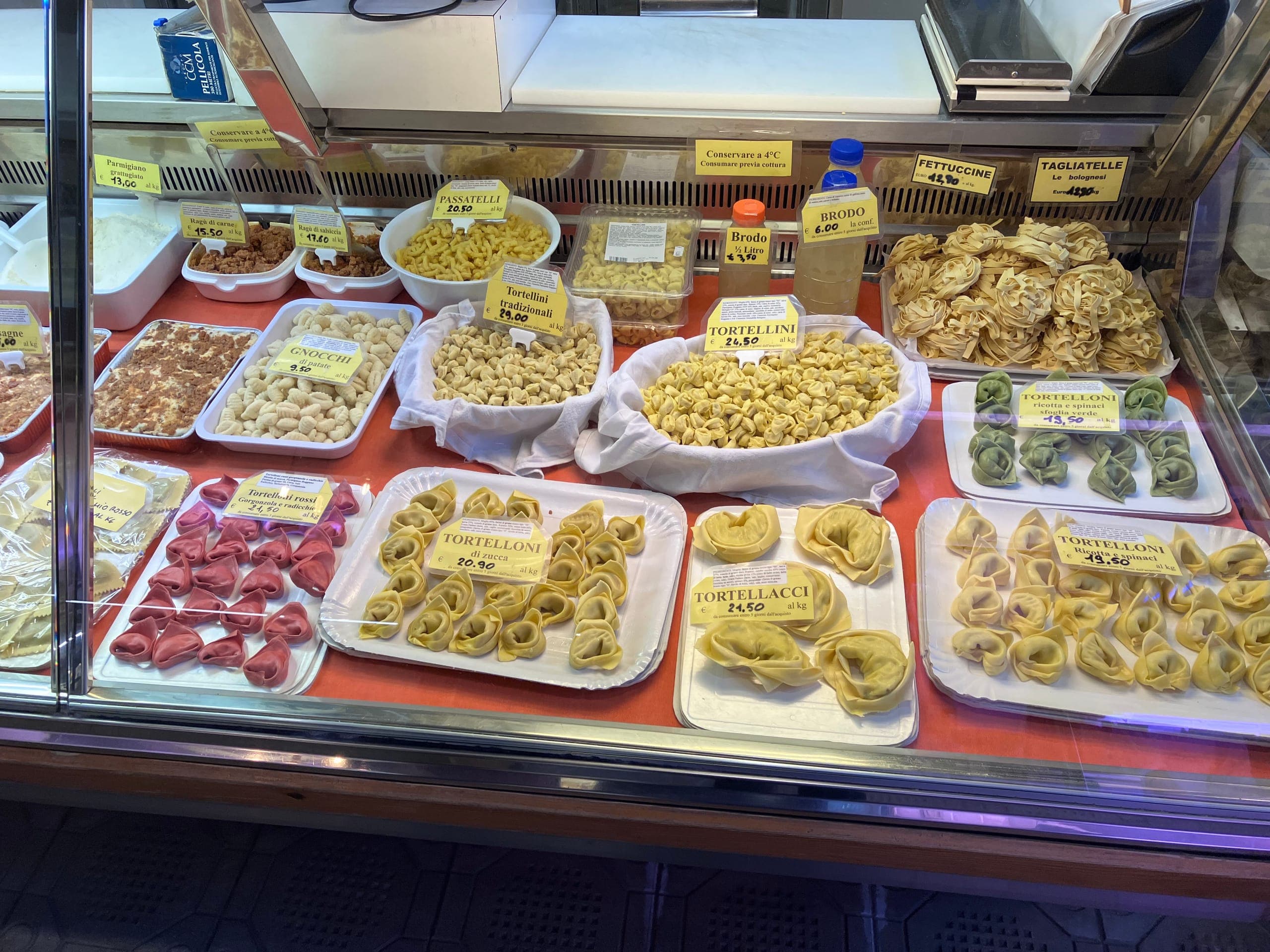
The undisputed king is the tortellino. Small and delicate, made of paper-thin egg pasta, it's filled with veal and pork, mortadella, Parmigiano Reggiano and spices (a little nutmeg among them), and folded by hand one by one. Watching someone close tortellini at speed is mesmerising — and it explains why a proper plate is never cheap. Modena has one iron rule: it's eaten in broth — capon broth on feast days, when the dish reaches its fullest, most golden form. Be wary of anyone serving it drowned in cream; here that's close to heresy. A bowl of tortellini in brodo is the dish locals choose for Christmas, for Sunday with the family, and for the moments that matter.
Its bigger sibling is the tortellone: larger, filled with ricotta and herbs (often spinach or parsley), and served with butter and sage or a light tomato sauce. Where the tortellino is rich and festive, the tortellone is gentle and green — a beautiful contrast on the same table. In winter, the city also switches to tagliatelle al ragù, cut wide and dressed with a meat sauce that simmers for hours; and to lasagne layered with béchamel and the same ragù. You'll also meet passatelli, a rustic "pasta" of breadcrumbs, eggs and Parmigiano pushed through a press straight into broth — comfort in a bowl. If you only have one first course in you, make it tortellini in broth; if you have two, add the tortelloni with butter and sage.
Gnocco fritto and tigelle: the convivial soul
These are the sociable heart of Modenese cooking, made for sharing across a long table with friends.
- Gnocco fritto is a sheet of leavened dough, cut into diamonds and fried in lard until it puffs into golden, crisp, hollow pillows. It arrives hot, you tear it open, and you drape it with prosciutto and cured meats so the warmth softens the fat — the quintessential Modenese aperitivo and an irresistible start to any meal.
- Tigelle (properly crescentine) are small discs of leavened dough cooked between hot terracotta or metal plates until lightly marked. You split them open while warm and fill them with cured meats, soft cheeses like squacquerone or stracchino, and the essential pesto modenese — not basil pesto, but a paste of lard, garlic and rosemary pounded together. One bite and you understand the whole region.
Order a mixed board of both with a selection of salumi and cheeses and let the kitchen bring the rotation. This is also the most fun, hands-on way to eat in Modena: everyone builds their own, and a meal becomes a two-hour conversation. Up in the Apennine foothills south of the city you'll also find borlenghi, paper-thin lacy crêpes brushed with cunza (a lardy, garlic-and-rosemary spread) and showered with Parmigiano — a mountain speciality worth a detour if you're heading into the hills.
Cured meats and zampone
Emilia is a land of master charcutiers, and Modena holds its own. Beyond silky prosciutto and the pink, pistachio-flecked mortadella (a Bologna native you'll find everywhere here), the city's signature product is zampone: ground pork, seasoned with spices, stuffed into the skin of a pig's trotter and slowly cooked. Its cousin cotechino is the same mixture in a simple casing. Both are holiday dishes — the New Year's Eve table almost demands them — traditionally served with lentils (a wish for prosperity) or creamy mashed potato. Zampone has its own protected status and a long local pedigree; it's rich, gelatinous and deeply savoury. It's worth trying at least once, ideally in winter when it's at its best, and it pairs brilliantly with a glass of dry Lambrusco that cuts straight through the fat.
Parmigiano Reggiano: the king of cheese
This is one of Modena's two ambassadors to the world. Parmigiano Reggiano is born in the countryside around the city, made only from local milk, salt and rennet — nothing else — and aged for 24, 36 months or longer. Younger wheels (around 24 months) are milder and more elastic; older ones (36 months and up) turn grainy, crystalline and intensely savoury, with little crunchy tyrosine crystals that are the sign of long ageing. Try it in shards, snapped (never sliced) from the wheel, perhaps with a few drops of traditional balsamic: sweetness, savouriness and acidity in a single bite, a pairing the locals consider perfection.
For many of our guests, the highlight is a dairy visit. The cheese is made fresh every morning, so the dairies (caseifici) open very early — often from around 8am — for tours that walk you from the steaming copper cauldrons to the vast ageing rooms stacked floor-to-ceiling with golden wheels, ending in a tasting of different ages side by side. It's an unforgettable, sensory hour, and an easy half-day from the centre; we're always glad to help arrange one. Buy a vacuum-sealed wedge of well-aged Reggiano to take home — it travels beautifully and tastes of the whole trip.
Balsamic vinegar: Modena's black gold
The city's other world ambassador is balsamic vinegar, and there are two very different products hiding behind the same word:
- Traditional Balsamic Vinegar of Modena PDO is the precious one: only cooked grape must, aged for at least 12 years (25 for the Extra Vecchio) in a battery of wooden barrels of different woods, with an annual topping-up called the rincalzo. It's dense, syrupy, sweet-and-sharp, and sold only in a distinctive spherical 100 ml bottle designed by Giorgetto Giugiaro, with the Consortium's seal. Used in drops, raw.
- Balsamic Vinegar of Modena PGI is the everyday kind: cooked must plus wine vinegar, aged 60 days to 2 years, sharper and far cheaper — perfect for salads and cooking.
A few drops of the Traditional on Parmigiano, on a strawberry or on vanilla ice cream, and you understand why it's so precious — and why it has nothing to do with the industrial bottles abroad. There's so much to say about it that we've devoted a whole guide to balsamic vinegar, including how to tell the two apart, how the battery works, and how to visit an estate.
Lambrusco: the right wine, finally
Forget the cloying, sweet Lambrusco you may have met abroad: the real thing is dry and sparkling, made for the table because its lively acidity and gentle fizz cut through and refresh between rich courses. It's the natural partner to everything in this guide — fatty salumi, fried gnocco, broth-rich pasta. Several denominations are produced around Modena, each with its own character:
- Lambrusco di Sorbara — the most elegant and aromatic, pale and lively, with notes of violet and red berries. The connoisseur's choice; ask for a glass with the cured meats and it's a revelation.
- Lambrusco Grasparossa di Castelvetro — fuller-bodied, deeper in colour, with more tannin and structure; the one to drink with gnocco fritto, tigelle and grilled meats.
- Lambrusco Salamino di Santa Croce — a happy medium: fruity, easy and food-friendly, named for the salami-like shape of its grape bunch.
- Lambrusco di Modena — a broader, dependable everyday denomination across the province.
All are best served lightly chilled, dry, and with food rather than alone. A bottle of Sorbara in the fridge of your apartment is, in our experience, one of the simplest pleasures of a Modena stay.
The Albinelli Market: the belly of Modena
The city's delicious heart is the Mercato Albinelli, built in 1931 beneath an elegant Art Nouveau hall, with a little fountain at its centre. It's the belly of Modena: stalls of hand-rolled fresh pasta, wheels of Parmigiano, hanging salumi, fishmongers, butchers, greengrocers piled with seasonal fruit and vegetables, and flower sellers — many of them run by the same families since the market opened. This continuity is part of the charm: you're buying from people whose grandparents stood behind the same counter.
Go in the morning (it's closed on Sunday) for a coffee, a few tastes and a breath of the real, working city. Several stalls and small counters prepare ready dishes and boards to eat on the spot — a plate of tortellini, a tigella with cold cuts, a glass of Lambrusco at a stand-up table — so the Albinelli doubles as one of the best, most authentic lunch spots in town. For self-caterers it's ideal: pick up fresh tortellini to boil at the apartment, a wedge of Reggiano, some prosciutto and a bottle of Sorbara, and you have a Modenese dinner with almost no effort. What to buy as gifts: vacuum-packed Parmigiano, a small bottle of PGI balsamic (the Traditional is a splurge), good salumi where allowed in your luggage, and a packet of amaretti.
Sweets, liqueurs and more
Modena's sweet tooth is rustic and honest rather than showy:
- Bensone — the classic everyday cake of Modena, a simple S- or loaf-shaped dry sweet, lightly perfumed with lemon, made from humble ingredients (flour, milk, eggs, butter, sugar). It's meant to be dunked: into an espresso in the morning, or famously into a glass of Lambrusco Grasparossa after dinner.
- Amaretti — fragrant almond macaroons, crisp outside and chewy within. By Modenese tradition they're wonderful with a few drops of traditional balsamic or a glass of Nocino.
- Nocino — a dark, intense walnut liqueur made by infusing alcohol with green, unripe walnut husks (traditionally gathered around the feast of San Giovanni in June) and sweetening it; served chilled after a meal as a digestivo.
- Sassolino — a clear anise liqueur from nearby Sassuolo, sipped after dinner and also used to flavour cakes and pastries, most famously the holiday torta di tagliatelle (a crunchy tart of fine tagliatelle and almonds).
- Erbazzone — a savoury, flat baked pie of chard or spinach with Parmigiano and a hint of lard or pancetta; more a Reggio speciality but found across the area and perfect as a snack.
Add to these the fritters and treats of Carnival in late winter and, of course, the gelato and the crema fritta you'll spot at fairs. None of it is fussy — all of it is delicious.
Where to eat: from the trattoria to Osteria Francescana
Modena has a table for every occasion and every budget.
- The trattorias of the centre and the surrounding countryside are the heart of everyday cooking: tortellini in broth, tagliatelle al ragù, boiled and roast meats, gnocco and tigelle with salumi, at honest prices. This is where you'll eat the truest food; a good trattoria lunch is the soul of a Modena trip.
- Aperitivo culture is alive and well: in the early evening the bars of the centre fill up, and a spritz or a glass of Lambrusco often comes with a generous plate of gnocco fritto and cold cuts. It's a lovely, low-cost way to start the night.
- At the very summit is Osteria Francescana, Massimo Bottura's restaurant in the historic centre, with three Michelin stars and repeatedly crowned the best restaurant in the world. Securing a table is a feat — book far ahead — but it shows just how high this cuisine can reach. His more relaxed bistro, Franceschetta 58, is a far more accessible way to taste the same creativity.
What does a typical sit-down meal look like? An antipasto of cured meats with gnocco or tigelle; a primo of tortellini in broth or tagliatelle; a secondo of roast or boiled meats with mostarda; cheese with a drop of balsamic; and a small sweet with a glass of Nocino — all washed down with dry Lambrusco. You won't manage every course every day, and you shouldn't try; pace yourself and savour it. Whatever your budget, it's almost impossible to eat badly in Modena.
Food experiences not to miss
Eating is only half of it — Modena lets you go behind the scenes:
- A visit to an acetaia (balsamic estate) in the countryside, climbing into the loft among the barrels for a tasting straight from the battery.
- A morning at a Parmigiano Reggiano dairy, watching the wheels born and tasting different ages.
- A food tour of the centre that links the Albinelli Market, a salumi shop and a Lambrusco bar, or a cooking class where you learn to roll and close your own tortellini.
- Acetaie Aperte, a Sunday in September when many vinegar lofts open their doors to visitors — the best single day to discover balsamic up close.
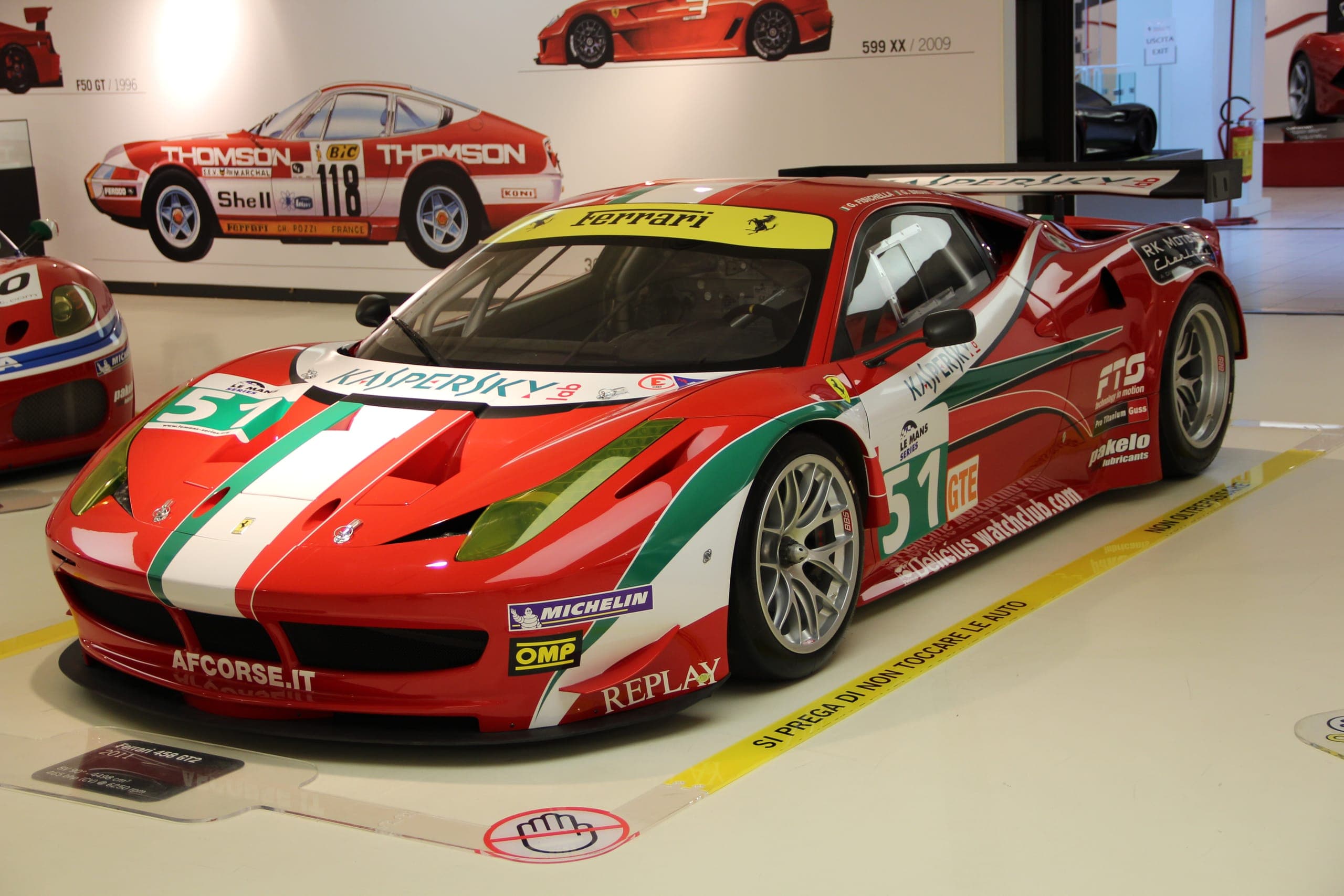
- If your trip falls in late May, the city also fills with engines for the Motor Valley Fest, an easy excuse to pair good food with Modena's other obsession — the Ferrari and Lamborghini museums are a short hop away.
These are exactly the kinds of mornings and afternoons we help our guests slot into a few days in the city.
When to come, and seasonal dishes
You can eat well year-round, but the rhythm changes. Spring (mid-April to mid-June) and September to early October are the loveliest times — mild, lively, and aligned with the food calendar (asparagus and fresh herbs in spring; the new harvest, Acetaie Aperte and the first cool-weather dishes in autumn). Winter is the season of tortellini in broth, tagliatelle al ragù, lasagne, bollito misto and zampone with lentils — hearty cold-weather cooking at its best, especially around Christmas and New Year. Summers are hot and muggy, but that's when chilled Lambrusco, gnocco fritto in the cool of the evening and a gelato come into their own. Whenever you come, there's a plate waiting.
Where to stay to eat well
The best way to experience the Modena of flavours is to stay right in the historic centre, steps from the Albinelli Market and the best trattorias, so you can walk to dinner and stroll home afterwards at your own pace — perhaps with a good Lambrusco already chilling in the fridge. Our apartments are all in the heart of the old town, which makes the food easy: morning market, lunch on the square, an afternoon tasting in the hills, dinner around the corner.
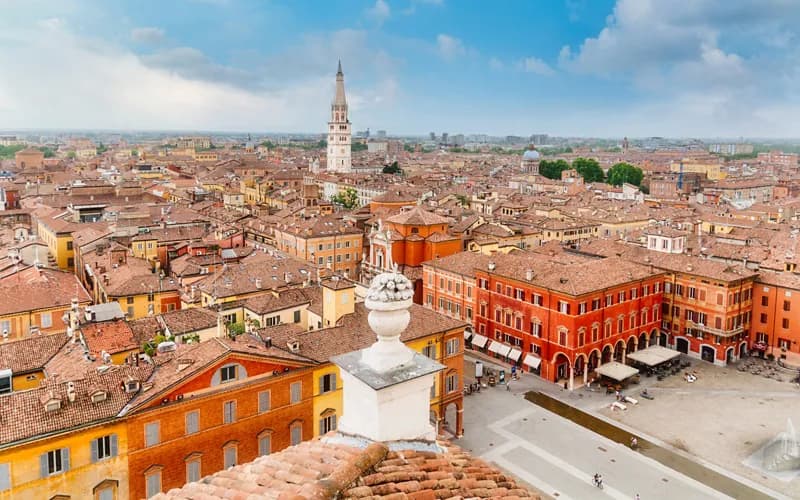
A few of ours are especially well placed for food lovers. The Ghirlandina View penthouse, with its terrace looking straight at the Duomo, is a magical spot for an aperitivo with a bottle from the market below. The luxury apartment beside the Francescana sits just 100 metres from Osteria Francescana, in the thick of the restaurant district. And if you're arriving by car for the dairies and acetaie of the countryside, Modena Prestige, on the ground floor with parking out front, makes coming and going effortless.
You book directly with us, with no portal commissions, and we're always glad to point you to where the locals eat. Browse our apartments in Modena, get the full picture of the city in what to see in Modena, and if you're based nearby see how easy it is as a day trip from Bologna.
Frequently asked questions
What food is Modena known for? Modena is known for tortellini in broth, gnocco fritto and tigelle with cured meats, zampone, and two world-famous products: Parmigiano Reggiano cheese and Traditional Balsamic Vinegar. To drink, dry sparkling Lambrusco.
What is the typical dish of Modena? The most iconic dish is tortellini in broth: small egg-pasta parcels filled with meat, mortadella and Parmigiano, served strictly in broth — often capon broth on feast days.
What is the food market in Modena? The Albinelli Market, built in 1931 in Art Nouveau style, is Modena's historic covered market: stalls of fresh pasta, cheese, cured meats, fruit and vegetables where locals shop. It's open in the morning and closed on Sundays.
Where is Osteria Francescana? Massimo Bottura's Osteria Francescana — three Michelin stars and repeatedly named the world's best restaurant — is in Modena's historic centre. Tables are very hard to book, but the city is full of trattorias serving the same traditions at everyday prices.
What's the difference between tortellini and tortelloni? Tortellini are small, filled with meat (veal and pork), mortadella, Parmigiano and spices, and eaten in broth. Tortelloni are larger, filled with ricotta and herbs, and served with butter and sage or a light sauce.
What wine should you drink in Modena? Lambrusco — but the real thing: dry and sparkling, not the sweet version sold abroad. Try Lambrusco di Sorbara (light and elegant) or Grasparossa di Castelvetro (fuller-bodied) with cured meats, gnocco fritto and tigelle.
How do I get to Modena to eat? Modena sits on the Bologna–Milan line. From Bologna it's about 30 minutes by regional train; Bologna Airport (BLQ) is roughly 54 minutes away. The historic centre is a limited-traffic zone (ZTL), so leave the car outside and walk — the station is about 10 minutes from the centre on foot.
Frequent questions
What readers ask us most.
What food is Modena known for?
Modena is known for tortellini in broth, gnocco fritto and tigelle with cured meats, zampone, and two world-famous products: Parmigiano Reggiano cheese and Traditional Balsamic Vinegar. To drink, dry sparkling Lambrusco.
What is the typical dish of Modena?
The most iconic dish is tortellini in broth: small egg-pasta parcels filled with meat, mortadella and Parmigiano, served strictly in broth — often capon broth on feast days.
What is the food market in Modena?
The Albinelli Market, built in 1931 in Art Nouveau style, is Modena's historic covered market: stalls of fresh pasta, cheese, cured meats, fruit and vegetables where locals shop. It's open in the morning and closed on Sundays.
Where is Osteria Francescana?
Massimo Bottura's Osteria Francescana — three Michelin stars and repeatedly named the world's best restaurant — is in Modena's historic centre. Tables are very hard to book, but the city is full of trattorias serving the same traditions at everyday prices.
What's the difference between tortellini and tortelloni?
Tortellini are small, filled with meat (veal and pork), mortadella, Parmigiano and spices, and eaten in broth. Tortelloni are larger, filled with ricotta and herbs, and served with butter and sage or a light sauce.
What wine should you drink in Modena?
Lambrusco — but the real thing: dry and sparkling, not the sweet version sold abroad. Try Lambrusco di Sorbara (light and elegant) or Grasparossa di Castelvetro (fuller-bodied) with cured meats, gnocco fritto and tigelle.
How do I get to Modena to eat?
Modena sits on the Bologna–Milan line. From Bologna it's about 30 minutes by regional train; Bologna Airport (BLQ) is roughly 54 minutes away. The historic centre is a limited-traffic zone (ZTL), so leave the car outside and walk — the station is about 10 minutes from the centre on foot.
Eat properly, then walk home.
Mercato Albinelli, the trattorias of the old town and the Lambrusco counters are all minutes from our apartments. After a dinner like that, not having to drive is half the pleasure.