Modena, Italy: The Complete Travel Guide
FNFrancesco NoliThe short answer
Modena is a UNESCO World Heritage city in Emilia-Romagna, famous for three things: its Romanesque cathedral and Ghirlandina tower, the Motor Valley (Ferrari, Lamborghini, Maserati, Pagani), and a food tradition that gave the world tortellini, Lambrusco, Parmigiano Reggiano and traditional balsamic vinegar. It's about 30 minutes by train from Bologna and an hour from Florence, and you can see the essentials in a day — though two days let you add the motor museums, the Estense art collection and a balsamic tasting.
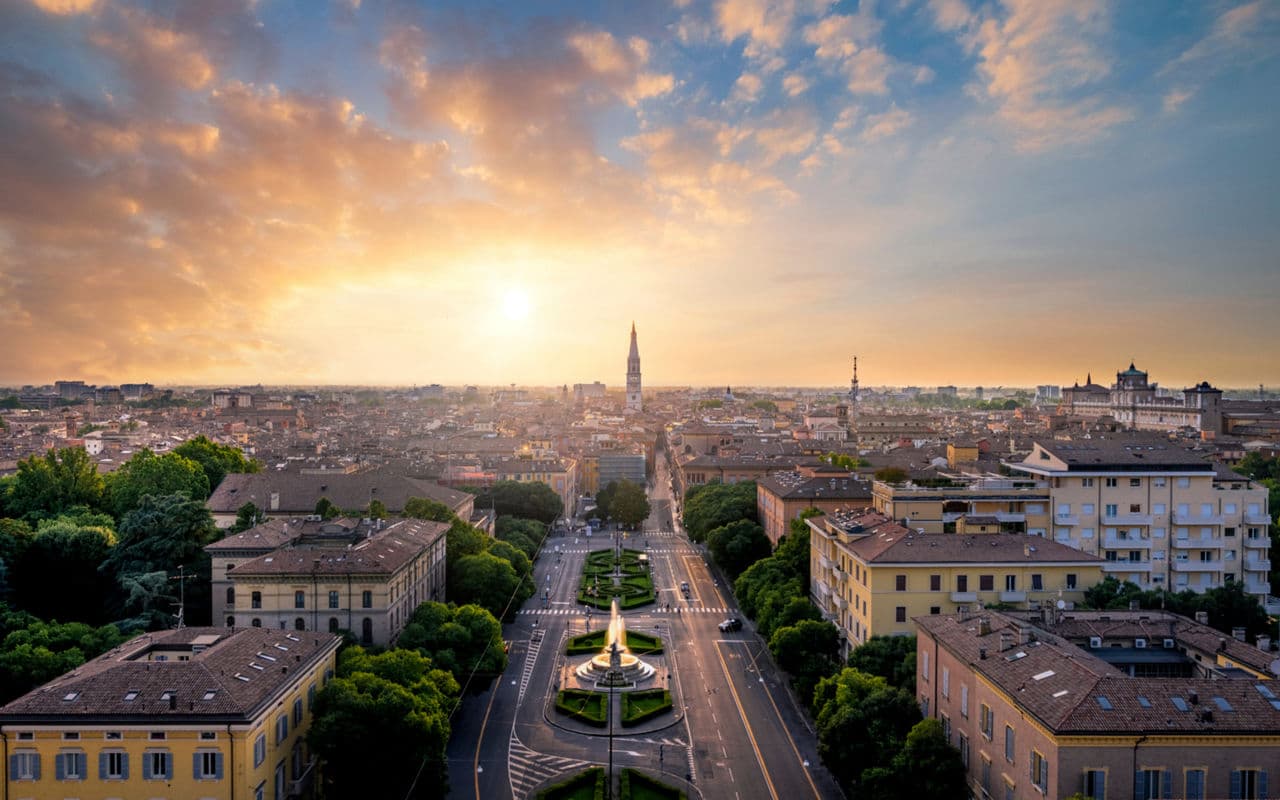
What to see and do in Modena, Italy: the UNESCO old town, the Ferrari and Lamborghini museums, art and hidden corners, balsamic vinegar and tortellini, how to get there, the best time to visit and where to stay.
Tucked along the ancient Via Emilia in the heart of Emilia-Romagna, Modena is one of northern Italy's most rewarding small cities — and one of its most underrated. In a compact, walkable centre you'll find a UNESCO World Heritage old town, the birthplace of Ferrari and the gateway to the Motor Valley, and a food tradition so rich it gave the world tortellini, Lambrusco, Parmigiano Reggiano and traditional balsamic vinegar. Add the home of Luciano Pavarotti, Massimo Bottura's three-Michelin-star Osteria Francescana, a ducal art collection and a famous piece of modern architecture, and you have a city that punches far above its size.
The best part? Modena is easy to reach and rarely crowded. This guide walks you through everything worth seeing and doing — from the cathedral to the cemetery, from the market to the museums — plus how to get here, the best time to come and where to stay, written by people who live here and welcome guests year-round.
Where Modena is, and how to get there
Modena sits between Bologna and Parma in Emilia-Romagna, in Italy's north. Its location makes it remarkably easy to reach:
- From Bologna Airport (BLQ): take the Marconi Express monorail to Bologna's central station (about 7 minutes), then a train to Modena in roughly 30 minutes — around 54 minutes door to door. A direct bus runs from the airport in about 45 minutes, and driving takes around 33 minutes.
- By high-speed train: Modena is on the Milan–Bologna line, with direct services to Florence in about 1 hour 5 minutes. Bologna — the regional high-speed hub — is just 30 minutes away, with onward connections of 37 minutes to Florence, about an hour to Milan and roughly two and a half hours to Rome.
- By car: Modena is on the A1 motorway. Keep in mind that the historic centre is a limited-traffic zone (ZTL), so plan to park outside it.
You can comfortably visit Modena without a car. Everything in the centre is walkable — the Duomo, the market, the Estense Gallery and the restaurant district are all within a 15-minute stroll of one another — and even the Ferrari Museum in Maranello is reachable by a dedicated shuttle from the city.
Piazza Grande, the Duomo and the Ghirlandina
The soul of Modena, and the reason it became a UNESCO World Heritage Site in 1997, is the trio of Piazza Grande, the Cathedral (Duomo) and the Ghirlandina tower.
The Duomo is one of the finest Romanesque cathedrals in Europe. Begun in 1099 by the architect Lanfranco, it was decorated by the sculptor Wiligelmo — one of the earliest documented collaborations between an architect and a sculptor, signed by explicit inscriptions on the building itself. Look closely at the façade: Wiligelmo's stone reliefs of Genesis are masterpieces of medieval sculpture. Don't miss the Porta della Pescheria on the north side, carved with the King Arthur cycle — the first such carving in Italy. Inside rest the remains of San Geminiano, Modena's patron saint, in the crypt beneath the raised presbytery. (We go deep into the complex in our guide to the Duomo and the Ghirlandina.)
Beside the cathedral rises the Ghirlandina, the nearly 89-metre civic tower that has become the symbol of the city. Its lower orders date to the era of Lanfranco and Wiligelmo, while the elegant octagonal top and spire were completed by 1319. Climb it, when open, for a view over the rooftops and out to the Apennines.
Piazza Grande's secrets and the Palazzo Comunale
Most visitors photograph the square and move on — but Piazza Grande hides centuries of civic life. On its eastern side stands the Palazzo Comunale, Modena's town hall, also part of the UNESCO site. Step inside (when open) to see the Sala del Fuoco, frescoed by Nicolò dell'Abate in 1546, and — a true Modenese curiosity — the Acetaia Comunale, the municipality's own balsamic vinegar loft in the attic, where you can learn how the city's "black gold" is made.
Out in the square, look for two medieval details locals love: the Preda Ringadora, the ancient speaker's stone from which public addresses were once made, and at the corner the enigmatic statue of the Bonissima, a civic symbol whose meaning is still debated. Go early, when the square is empty and the light is low: it's the most beautiful moment of the day.
The Motor Valley: Ferrari, Lamborghini and more
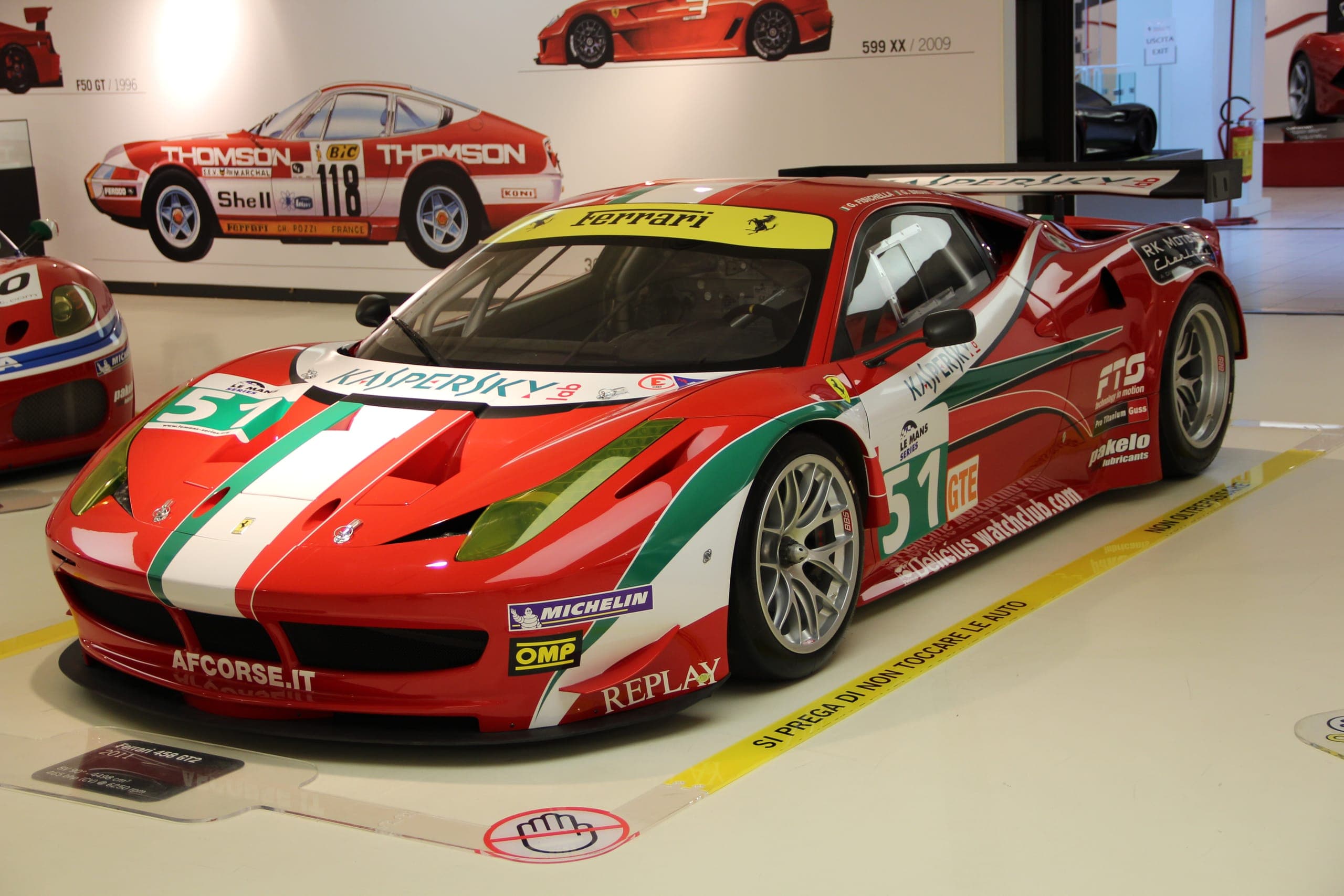
Modena is the capital of the Motor Valley, and for many visitors the cars are the reason to come. Right in the city stands the Enzo Ferrari Museum, with its yellow bonnet-shaped roof beside Enzo's birthplace; 18 km away in Maranello is the Ferrari Museum, with its Hall of Victories and Fiorano shuttle tour. Add the Lamborghini Museum in Sant'Agata Bolognese, the Pagani atelier, the Maserati collection and the Ducati museum near Bologna, and you have the densest concentration of supercar heritage on earth.
It's a world worth a guide of its own — we cover hours, tickets, the shuttle and itineraries in our dedicated piece on the Ferrari and Lamborghini museums.
Modena, a food capital
If the engines are Modena's adrenaline, food is its heartbeat. This is one of the great gastronomic corners of Italy, and tasting your way through it is half the trip.
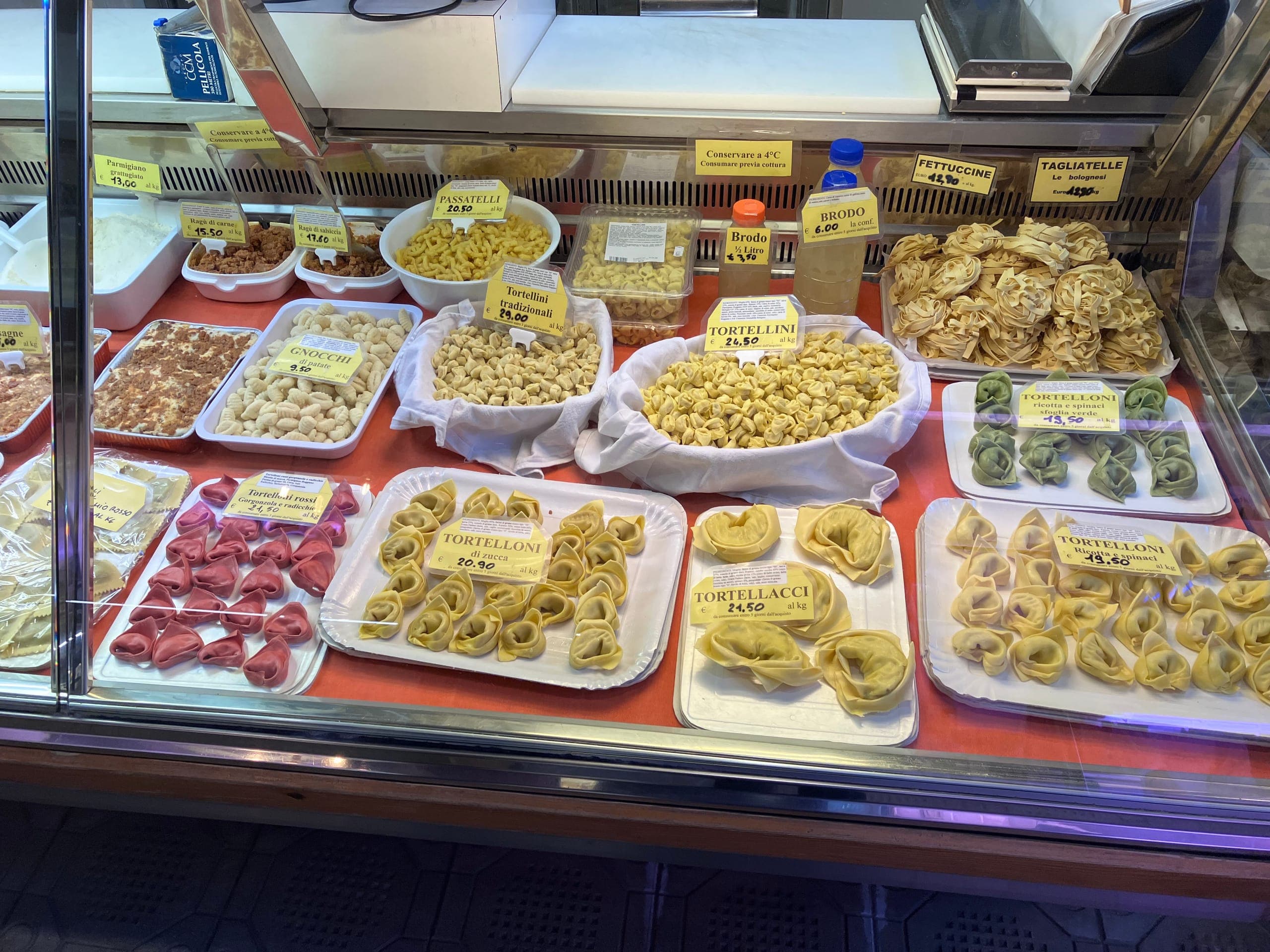
- Tortellini in brodo are the local icon — tiny hand-folded parcels served in broth, the dish every Modenese grandmother has an opinion about. In winter, switch to tagliatelle al ragù, or try gnocco fritto and tigelle with cured meats.
- Lambrusco, the region's sparkling red, is dry, fresh and made to cut through rich food — forget anything you've tasted abroad.
- Parmigiano Reggiano is made in the surrounding countryside; many dairies open for morning visits and tastings.
- Traditional Balsamic Vinegar of Modena (PDO) is the city's liquid gold — aged for years, even decades, in wooden barrels. Producers like Acetaia Giusti, the oldest in Italy with around 400 years of history, open their ageing cellars for tours and tastings.
- The Mercato Albinelli, a covered market built in 1931, is the city's belly: stalls of fresh pasta, cheese, cured meats, fruit and flowers, some run by the same families since it opened.
- And at the summit, Osteria Francescana — Massimo Bottura's three-Michelin-star restaurant, repeatedly named the best in the world.
We go deeper into where and what to eat in our guide to the flavours of Modena.
Art and history beyond the square
Modena was for centuries the capital of the Este dukes, and they left it a remarkable artistic legacy, mostly gathered inside the grand Palazzo dei Musei:
- The Galleria Estense, on the palace's top floor, holds the dukes' collection: paintings, sculpture and decorative arts from the 14th to the 18th century. Among the masterpieces are Velázquez's Portrait of Francesco I d'Este, Bernini's marble bust of the same duke, El Greco's Modena Triptych, a Correggio Madonna and a Guido Reni Crucifixion — a small but world-class gallery.
- In the same building, the Biblioteca Estense guards the Bible of Borso d'Este, one of the most exquisitely illuminated manuscripts ever made — a glittering treasure of the Italian Renaissance.
- The Casa Museo Luciano Pavarotti, on the city's edge, is the home of the legendary tenor, born in Modena, kept as he left it — costumes, awards and personal memories. Open daily 10:00–18:00, tickets around €12.
- The Palazzo Ducale, one of Italy's most imposing Baroque palaces, is today home to the Military Academy and can be visited on guided tours at weekends (booking required) — a rare look at gilded halls usually closed to the public.
Modena off the beaten path
Spend a second day and Modena reveals quieter, surprising corners that most tourists never reach:
- The Synagogue, built in 1873, is one of the largest in Italy and the centrepiece of Piazza Mazzini, the heart of the city's ancient Jewish ghetto — a moving, lesser-known layer of Modena's history.
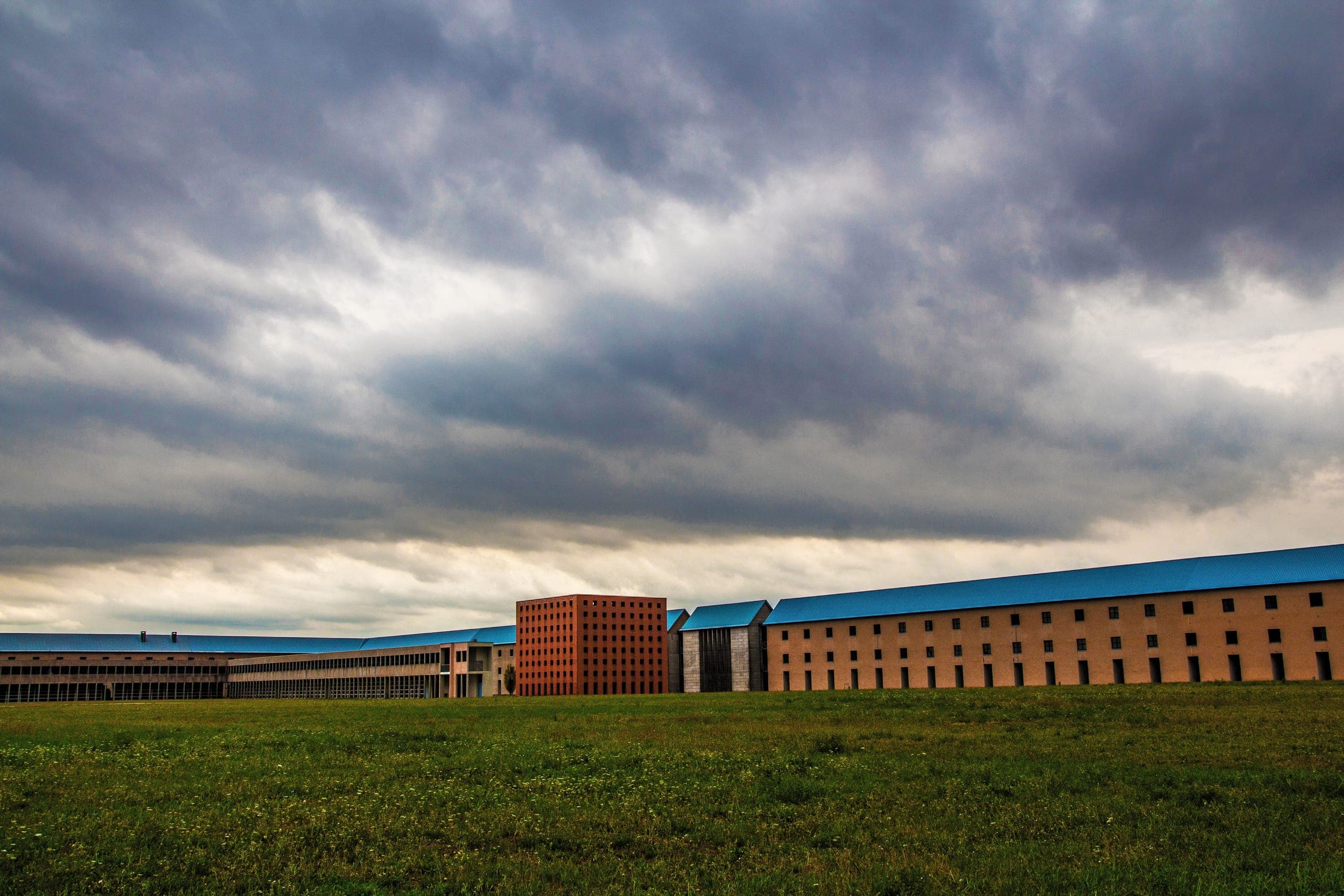
- The San Cataldo Cemetery, designed by Aldo Rossi from 1971, is a pilgrimage site for architecture lovers: a haunting, monumental work considered one of the founding buildings of Postmodern architecture, just outside the centre.
- The Orto Botanico (botanical garden), founded in 1758 by Duke Francesco III d'Este, is a green pocket of calm with historic medicinal plants.
- The Parco Enzo Ferrari, a vast 400,000 m² park, was once a racetrack where Ferraris raced in the 1950s — now the city's green lung and a summer events venue.
- For bargain-hunters, the Parco Novi Sad hosts a big weekly market on Mondays and a much larger flea-and-vintage market on the third Sunday of each month.
Modena with kids
Modena is a family-friendly city: distances are short, everything is on foot, and there's plenty for younger travellers. The motor museums are a sure hit — cars, sounds and projections appeal to every age, and under-5s go free at the Ferrari and Lamborghini museums. The Albinelli Market is a feast for the senses, full of colours and tastings, while green spaces like the Parco Enzo Ferrari give kids room to run after a morning of sightseeing. Climbing the Ghirlandina, when it's open, is a small adventure with a view. And Modenese food — from tortellini to gelato with a drop of balsamic — keeps everyone happy.
Evenings in Modena
Modena changes character after dark. The aperitivo is a ritual: locals gather in the squares and bars of the centre for a glass of Lambrusco with gnocco fritto and cured meats, usually between 6 and 8 pm. Then dinner, at one of the many trattorias where traditional cooking is the rule, or a wine bar for a glass and a board. The lit-up historic centre, emptied of the day's visitors, is one of the loveliest ways to experience the city — and if you stay in the centre, you simply walk home, no car required.
Practical tips for your visit
- Getting around: the whole centre is walkable — you won't need public transport. The station is about a 10-minute walk from the main square.
- ZTL and parking: the historic centre is largely a camera-monitored limited-traffic zone (ZTL). If you arrive by car, park outside the ZTL (along the avenues) or choose accommodation with parking nearby.
- Tickets and museums: buy tickets online for the Ferrari museums and the busiest sights; many civic museums have reduced hours or close on Mondays.
- Guided tours: the central tourist office runs guided visits to the Duomo, the Ghirlandina, the Palazzo Ducale and the balsamic estates.
- How long to stay: a full day for the historic centre, two days to combine motors, art and food without rushing.
The best time to visit
Modena has a semi-continental climate — hot, muggy summers and cold, damp winters. The sweet spots are spring (mid-April to mid-June) and September to early October, when the weather is mild, the light is golden and the cultural calendar is at its busiest.
Two events are worth planning around:
- Motor Valley Fest (late May) turns the whole city into a celebration of engines, with cars in the squares, paddocks and track sessions.
- Acetaie Aperte (a Sunday in September) opens the balsamic vinegar lofts across the area for tours and tastings — a unique window into the city's most precious craft.
If you prefer quiet streets and easy restaurant tables, aim for a weekday outside these dates.
How many days, and a suggested itinerary
- One day: Piazza Grande, the Duomo and the Ghirlandina in the morning; the Mercato Albinelli and a tortellini lunch; the Enzo Ferrari Museum or a balsamic tasting in the afternoon.
- Two days: add the Ferrari museums (with the Maranello shuttle) or the Lamborghini Museum, plus time for the Estense gallery or the Pavarotti house.
- A weekend: the full picture — UNESCO centre, motors, food, art and a slower second morning over coffee in the square.
For a detailed plan, see our one-day and weekend itinerary for Modena.
Day trips from Modena
Modena is a brilliant base for the region. Within easy reach: Maranello (the Ferrari Museum, by shuttle), Sant'Agata Bolognese (Lamborghini), Bologna (30 minutes by train, for its towers and food), and Parma (Parmesan, prosciutto and a jewel-box old town). You can see why so many travellers make Modena their hub rather than a stopover.
Where to stay, and getting around
The centre is small and walkable, so the best place to stay is right in the historic heart — close to the Duomo, the market, the restaurants and the station. Remember the ZTL: if you arrive by car, choose accommodation with parking nearby or plan to leave the car outside the limited-traffic zone.
Our apartments are all in central Modena, each a short walk from the UNESCO sights and the best tables in town — one of them right on Piazza Mazzini, beside the synagogue. You book directly with us, with no booking-platform commissions, and we're always happy to share where to eat, what to skip and how to plan your days. Take a look at our apartments in Modena and choose your base in the city, or read our guide to where to stay in Modena.
Frequently asked questions
Is Modena worth visiting? Absolutely. Modena packs a UNESCO World Heritage old town, the Ferrari and Lamborghini museums and one of Italy's best food scenes into a compact, walkable city — with far fewer crowds than Florence or Venice. It rewards both a quick day trip and a relaxed weekend.
How many days do you need in Modena? One day is enough for the UNESCO centre, the Albinelli Market and a great meal. Two days let you add the Ferrari and Lamborghini museums, the Estense Gallery and a traditional balsamic vinegar tasting. A weekend is ideal.
How do you get to Modena? Modena is about 30 minutes by regional train from Bologna, roughly 54 minutes from Bologna Airport, and around an hour from Florence by high-speed train. By car it's on the A1 motorway, but note the historic centre is a limited-traffic zone (ZTL).
What is Modena famous for? Modena is famous for its UNESCO Romanesque cathedral and Ghirlandina tower, for being the birthplace of Ferrari and the heart of the Motor Valley, for traditional balsamic vinegar, tortellini and Lambrusco, and as the home of tenor Luciano Pavarotti and chef Massimo Bottura's Osteria Francescana.
When is the best time to visit Modena? Spring (mid-April to mid-June) and September to early October offer the most comfortable weather and a lively cultural calendar. Summers are hot and muggy; winters cold and damp. Late May brings the Motor Valley Fest and September the balsamic vinegar open days (Acetaie Aperte).
Can you visit Modena as a day trip from Bologna? Yes — Modena is only about 30 minutes from Bologna by train, making it an easy day trip. For the Ferrari museums in particular, though, staying overnight in Modena is more relaxed, since the Maranello shuttle departs from the city.
Frequent questions
What readers ask us most.
Is Modena worth visiting?
Absolutely. Modena packs a UNESCO World Heritage old town, the Ferrari and Lamborghini museums and one of Italy's best food scenes into a compact, walkable city — with far fewer crowds than Florence or Venice. It rewards both a quick day trip and a relaxed weekend.
How many days do you need in Modena?
One day is enough for the UNESCO centre, the Albinelli Market and a great meal. Two days let you add the Ferrari and Lamborghini museums, the Estense Gallery and a traditional balsamic vinegar tasting. A weekend is ideal.
How do you get to Modena?
Modena is about 30 minutes by regional train from Bologna, roughly 54 minutes from Bologna Airport, and around an hour from Florence by high-speed train. By car it's on the A1 motorway, but note the historic centre is a limited-traffic zone (ZTL).
What is Modena famous for?
Modena is famous for its UNESCO Romanesque cathedral and Ghirlandina tower, for being the birthplace of Ferrari and the heart of the Motor Valley, for traditional balsamic vinegar, tortellini and Lambrusco, and as the home of tenor Luciano Pavarotti and chef Massimo Bottura's Osteria Francescana.
When is the best time to visit Modena?
Spring (mid-April to mid-June) and September to early October offer the most comfortable weather and a lively cultural calendar. Summers are hot and muggy; winters cold and damp. Late May brings the Motor Valley Fest and September the balsamic vinegar open days (Acetaie Aperte).
Can you visit Modena as a day trip from Bologna?
Yes — Modena is only about 30 minutes from Bologna by train, making it an easy day trip. For the Ferrari museums in particular, though, staying overnight in Modena is more relaxed, since the Maranello shuttle departs from the city.
Stay in the centre, see Modena on foot.
All our apartments are inside the historic centre: step out of the door and you are already in the middle of what you have just read about. No restricted-traffic zone to decode, no parking to hunt for every morning.