One Day in Modena: The Perfect Itinerary (+ Weekend Guide)
FNFrancesco NoliThe short answer
Modena is perfect for one day: a morning at the Duomo, the Ghirlandina and the Albinelli Market, a tortellini lunch, an afternoon at the Enzo Ferrari Museum or a balsamic vinegar estate, and an aperitivo in Piazza Grande. With a second day you can add the Ferrari museums in Maranello (by shuttle) or the Lamborghini Museum. The whole centre is walkable and you don't need a car.
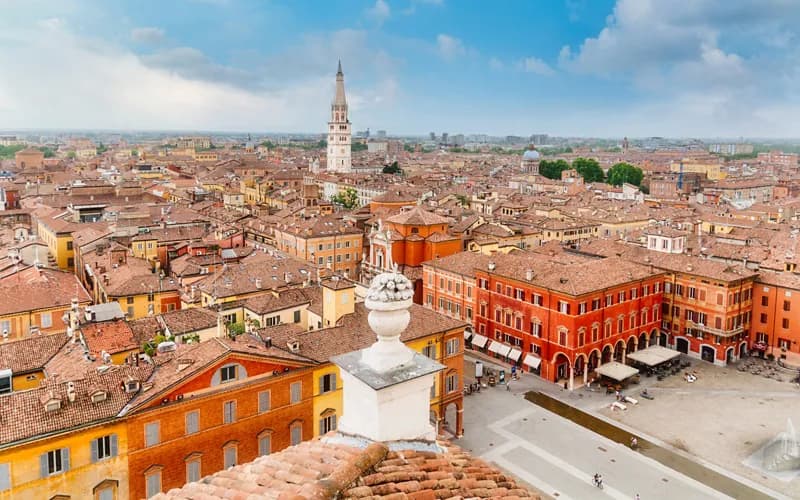
What to do in Modena in one day and over a weekend: an hour-by-hour itinerary through the Duomo, Albinelli Market, tortellini, the Ferrari museums and balsamic estates.
Modena is the perfect city for a short trip: small, compact and walkable, yet able to combine a UNESCO World Heritage old town, the land of supercars and one of Italy's best food scenes. You don't need to choose between culture, engines and the table here — in a single, unhurried day you can have all three. Whether you have one day, a full weekend or a couple of extra hours to stretch into a regional adventure, here is the itinerary we suggest to our guests: hour by hour, with honest timings, a few variations for families, food lovers, couples and rainy days, and everything you need to know about getting around. We live here and welcome travellers year-round, so this is the plan we'd give a friend.
One day in Modena: an hour-by-hour itinerary
A single day is genuinely enough to fall for Modena. The trick is to start early, keep the morning for the UNESCO core and the market, give the middle of the day to a proper lunch, and use the afternoon for the one big thing you came for — engines, balsamic or art. Here's how the hours fall into place.
9:00 — Piazza Grande, the Duomo and the Ghirlandina
Begin in the UNESCO heart of the city, while the square is still quiet and the morning light is low and golden. Piazza Grande, laid out in the second half of the 12th century along the ancient Via Emilia, is one of the most harmonious medieval squares in Italy — and at this hour you'll have it almost to yourself.
The Duomo is the reason Modena became a World Heritage Site in 1997. Begun in 1099 by the architect Lanfranco and carved by the sculptor Wiligelmo, it is one of the earliest documented collaborations between a named architect and a named sculptor in European art — both signed the building. Stand at the façade and read Wiligelmo's stone reliefs of Genesis, masterpieces of Romanesque sculpture, then step inside to the raised presbytery and down into the crypt where San Geminiano, Modena's patron saint, rests. Look for the inside details too: the rood screen with its Passion reliefs by the Campionese masters, and the terracotta sculptures by Antonio Begarelli. Before you move on, walk around to the north side and find the Porta della Pescheria, carved with the King Arthur cycle — the first Arthurian scene ever carved in Italy, and a detail almost no visitor notices.
Beside the cathedral rises the Ghirlandina, the nearly 89-metre civic and bell tower that has become the symbol of Modena. Its octagonal top and spire were finished by 1319. If it's open the morning you visit, climb it for the view over the rooftops, the Apennines and out across the Po plain — and to see the Secchia Rapita, the famous wooden bucket tied to the centuries-old rivalry with Bologna. We go deep into the whole complex in our guide to the Duomo and the Ghirlandina.
While you're in the square, don't rush past the Palazzo Comunale (the town hall, also part of the UNESCO site) on the eastern side. When it's open you can see the Sala del Fuoco, frescoed by Nicolò dell'Abate in 1546, and — a true Modenese quirk — the Acetaia Comunale, the city's own balsamic vinegar loft up in the attic. Out in the square, spot the Preda Ringadora, the medieval speaker's stone, and the enigmatic statue of the Bonissima.
10:30 — Mercato Albinelli
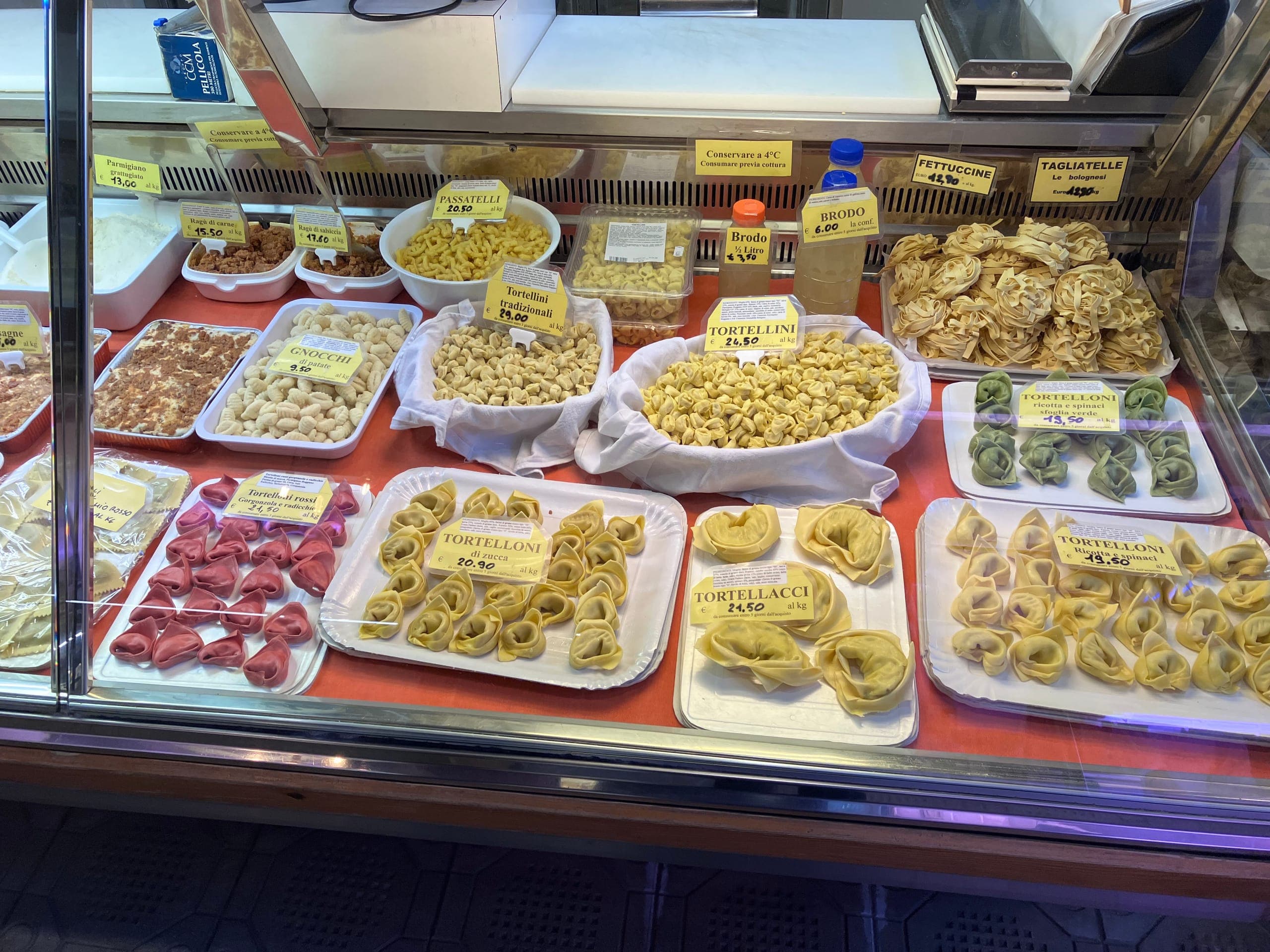
A few steps away, under a beautiful Art Nouveau hall built in 1931, the Mercato Albinelli is Modena's belly. This covered market is where the city shops and gossips: stalls of fresh pasta, cheese, cured meats, fruit, flowers and fish, some run by the same families since it opened. Slow down here. Have a coffee, taste a wedge of Parmigiano Reggiano, eye the trays of hand-folded tortellini, and breathe in the city's food culture before you taste it at lunch. It's closed on Sundays and best in the morning, so the timing is deliberate.
11:15 — A stroll through the centre
Now lose yourself. Modena's centre rewards aimless walking: porticoed streets, hidden courtyards, historic shops and quiet squares. Wander toward Piazza Mazzini to see the Synagogue of 1873, one of the largest in Italy, in the heart of the former Jewish ghetto. Drift down the porticoed Via Emilia, peek into a bookshop or a pastry window, and let the rhythm slow. Modena is a city that gives its best to those who don't hurry.
13:00 — Lunch: tortellini and Lambrusco
This is the meal you came for. Sit down at a central trattoria for tortellini in brodo — tiny hand-folded egg-pasta parcels, filled with veal, pork, mortadella, Parmigiano and spices, served in a clear capon broth. They are the dish every Modenese grandmother has an opinion about. In the colder months, switch to tagliatelle al ragù, or order a board of gnocco fritto and tigelle with cured meats. Pair it all with a glass of dry, sparkling Lambrusco — nothing like the sweet version exported abroad — and you'll understand half the reason people come to Modena. We tell you exactly what to order and where in our guide to the flavours of Modena.
15:00 — The afternoon, your choice
After lunch, give the afternoon to one signature experience. Don't try to do all of these — pick the one that's yours:
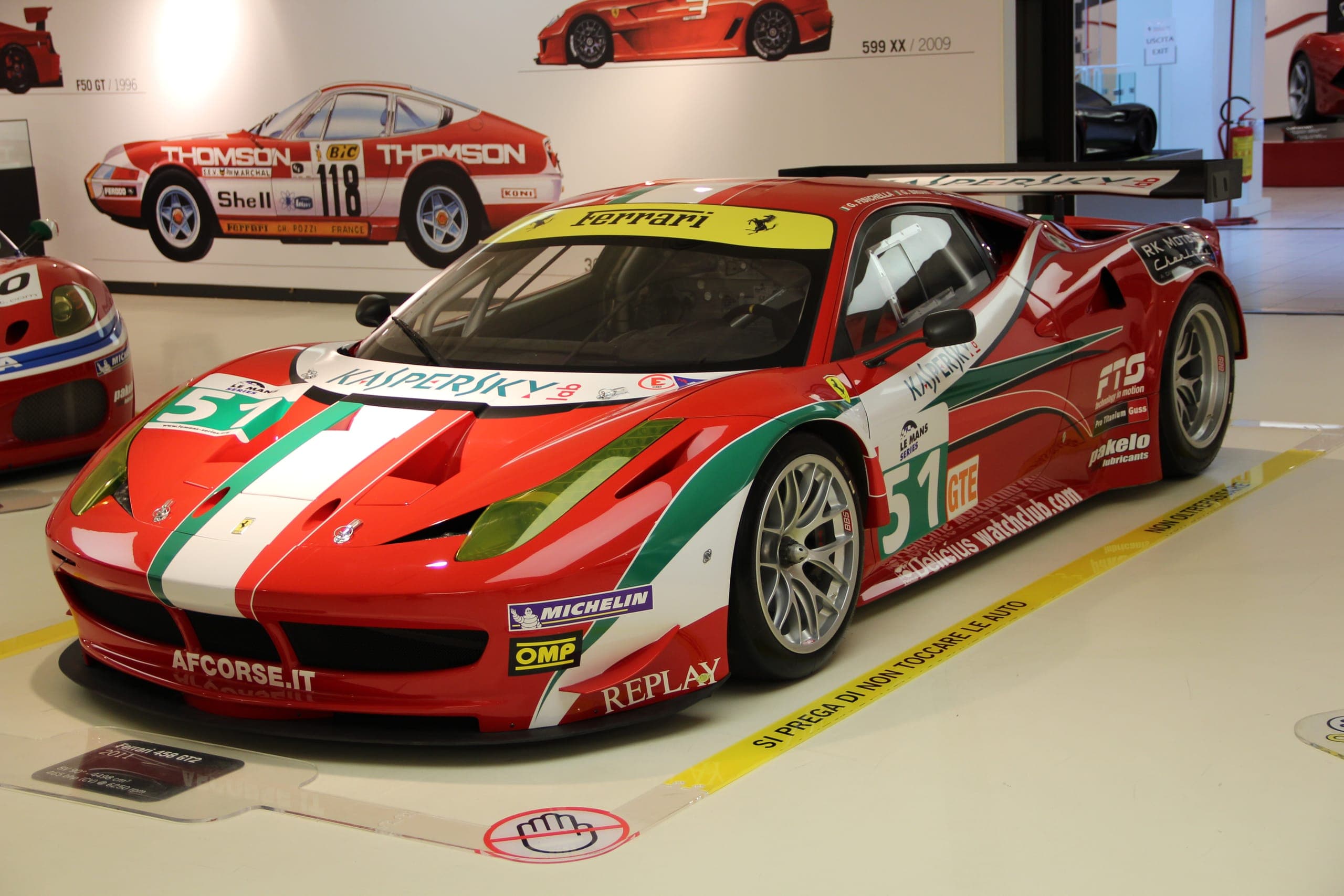
- For petrolheads: the Enzo Ferrari Museum, with its unmistakable yellow bonnet-shaped roof, built beside the house where Enzo was born. It's a few minutes' walk from the centre and the station, open daily 09:30–18:00 (last entry 17:00). A short, emotional visit into the origin story of the most famous name in motoring.
- For food lovers: a guided balsamic vinegar tasting at an acetaia. You'll climb to a loft full of wooden barrels — oak, cherry, chestnut, mulberry, juniper — and taste Traditional Balsamic Vinegar of Modena PDO, aged a minimum of 12 years (25 for the Extravecchio). Acetaia Giusti, the oldest in Italy at around 400 years, opens its cellars and museum.
- For culture seekers: the Pavarotti House Museum (the great tenor's home, daily 10:00–18:00, around €12) or the Galleria Estense on the top floor of the Palazzo dei Musei, home to Velázquez's Portrait of Francesco I d'Este, Bernini's marble bust of the same duke, El Greco's Modena Triptych and a Correggio Madonna.
18:30 — Aperitivo and dinner
As the light fades, head back to Piazza Grande for an aperitivo — a glass of Lambrusco with gnocco fritto and cured meats, the local ritual, taken in the bars and on the terraces around the square. Then dinner at a trattoria in the centre. Modena in the evening, emptied of day-trippers and softly lit, is a different and more intimate city — and if you're staying in the heart of town, you simply walk home afterwards. No car, no taxi, no fuss.
A weekend in Modena: the second day
One day shows you the city; a second day shows you the region. With an extra night you can reach the things that make this corner of Emilia-Romagna world-famous — and you'll be glad you didn't try to cram them into a single afternoon.
Morning option A — the engines
Modena is the capital of the Motor Valley, and the second morning is the moment to dive in. From the city, take the dedicated visitor shuttle to the Ferrari Museum in Maranello (about 18 km away). The shuttle links the Enzo Ferrari Museum and Modena's station with Maranello roughly every 90 minutes — departures from Modena at 09:50, 11:20, 12:50, 14:20, 15:50 and 17:20, returning at 10:30, 12:00, 13:30, 15:00, 16:30 and 18:30 (around €10 return if you're visiting both museums). At Maranello you'll find the Hall of Victories with 110+ trophies and nine drivers' helmets, the Fiorano track shuttle tour, and a semi-pro F1 simulator. The Musei Ferrari Pass covers both the Modena and Maranello museums within 48 hours, so you can split them across your two days. Full timings, tickets and tips are in our guide to the Ferrari and Lamborghini museums.
Morning option B — the flavour route
If your heart is in the kitchen rather than the cockpit, spend the morning on the food route instead. Start very early at a Parmigiano Reggiano dairy, where many producers open their doors during the morning's production and let you watch the wheels being formed and taste cheese aged 24, 36 months or more. Then move on to a balsamic estate to see the batteria of barrels and taste the difference between the PDO traditional vinegar (cooked grape must only, aged for years) and the everyday PGI/IGP version. It's a slower, more sensory morning — and arguably the most Modenese thing you can do.
Afternoon — Modena at leisure
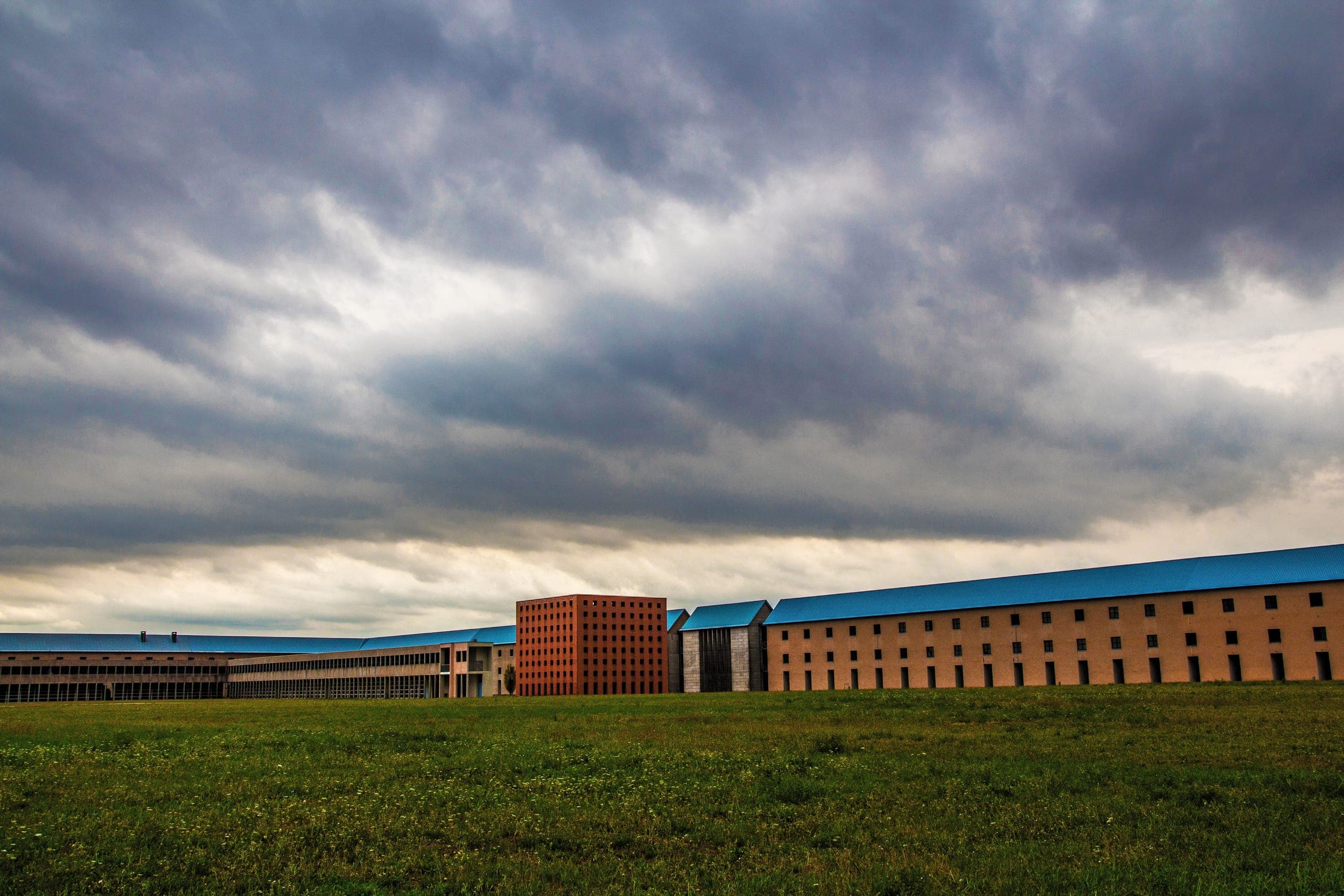
In the afternoon, return to the city and dig a little deeper. On weekends you can book a guided tour of the Palazzo Ducale, today the home of Italy's Military Academy, with its grand Baroque halls — a rare chance to step inside a building usually closed to the public (booking required). Prefer more engines? Devote the afternoon to another motor museum — Lamborghini in Sant'Agata Bolognese (about 30 km), or the Pagani atelier near San Cesario. Or simply wander the parts of Modena most visitors miss: the postmodern San Cataldo Cemetery by Aldo Rossi, the Orto Botanico of 1758, or the vast Parco Enzo Ferrari, laid out on a 1950s racetrack.
Evening — one last Modenese dinner
Finish the weekend in style: a board of local cured meats, a traditional first course — tortelloni with butter and sage if tortellini in broth feels repeated — and a good Lambrusco to toast a city you'll already be planning to return to.
A third day: Bologna or Parma
If you can steal a third day, Modena is a brilliant base for the region — and you don't even need a car.
- Bologna is just 30 minutes away by regional train, with more than 100 trains a day and fares from around €4. Spend a day under its endless porticoes, climb its leaning towers, eat at the Quadrilatero food market, and come back to Modena for the quiet of the evening. (If you're approaching from the other direction, see our Modena day trip from Bologna guide.)
- Parma, in the opposite direction, is the city of Parmigiano Reggiano and prosciutto di Parma, with a jewel-box old town, a magnificent baptistery and a refined, less-visited atmosphere. It pairs beautifully with Modena's food story.
Both are easy returns by train, so you sleep in Modena and explore the region by day — the smartest way to do Emilia-Romagna.
Itinerary variations
No two travellers want the same day. Here's how to bend the core itinerary to suit who you're travelling with.
With kids
Lean into the motor museums: cars, engine sounds, racing projections and simulators delight every age, and under-5s go free at the Ferrari and Lamborghini museums. The Albinelli Market is a feast for the senses, full of colours and free tastings, and climbing the Ghirlandina, when open, is a small adventure with a big view. Short distances and a fully walkable centre make everything easy, even with a stroller, and green space at the Parco Enzo Ferrari lets kids run between stops. End the day with gelato — ask for a drop of balsamic on top, and watch their faces.
For food lovers
Build the entire day around the table. Breakfast and tastings at the Albinelli Market, a balsamic tasting mid-morning, a long tortellini lunch, a Parmigiano dairy visit (best booked for an early slot), and an aperitivo with Lambrusco to close. If you've planned ahead and got lucky with a booking, dinner at Osteria Francescana — Massimo Bottura's three-Michelin-star restaurant, repeatedly named the world's best — or its more accessible bistro, Franceschetta 58. Modena rewards those who arrive hungry.
On a rainy day
A wet day in Modena is no problem at all. The centre is laced with porticoes that keep you dry between stops, and almost every highlight is indoors: the Duomo, the Albinelli Market, the Enzo Ferrari Museum, the Galleria Estense, the Pavarotti House, an acetaia tasting under cover. Swap the open-air stroll for a museum, linger longer over lunch, and let the rain become an excuse to slow down.
For couples
Modena is quietly romantic. Time the morning so you're in Piazza Grande at first light, almost alone. Share a tasting of aged balsamic — a few drops on Parmigiano or even on vanilla ice cream is a small revelation. Take the slow route through the porticoes, book a candlelit dinner at a trattoria in the lamplit centre, and end with a passeggiata around the floodlit Duomo. Staying in a central apartment with a view of the Ghirlandina turns the whole evening into the experience.
For art lovers
Devote the afternoon — or a whole second day — to the Palazzo dei Musei. The Galleria Estense holds a small but world-class collection (Velázquez, Bernini, El Greco, Correggio, Guido Reni), and in the same building the Biblioteca Estense guards the dazzling Bible of Borso d'Este, one of the finest illuminated manuscripts ever made. Pair it with the Museums of the Cathedral — the Lapidary Museum holds the original Metopes, eight Romanesque sculptures of monstrous beings by the Master of the Metopes — and, for modern tastes, Aldo Rossi's haunting San Cataldo Cemetery.
How to get around
The whole point of Modena is its scale: the entire historic centre is walkable, from the sights to the restaurants to the station, in a matter of minutes — the Duomo, the market, the galleries and the trattorias are all within a 15-minute stroll of one another. You genuinely don't need a car, and in fact a car is a liability: the centre is largely a ZTL (a camera-enforced limited-traffic zone). If you do arrive by car, leave it in a car park outside the zone, along the avenues, and walk in. The train station is about a 10-minute walk from Piazza Grande.
For the Ferrari Museum in Maranello, use the dedicated shuttle from the city rather than driving. For Lamborghini, Pagani and the Ducati museum near Bologna, a car is more convenient, but each is also reachable with a little planning. The bottom line: arrive by train, stay in the centre, and explore on foot.
When to go
The best windows are spring (mid-April to mid-June) and September to early October: mild weather, golden light and a city in full swing. Summers in Modena are hot and muggy, winters cold and damp — both perfectly visitable, but less comfortable for long days on foot. Two dates are worth planning around: the Motor Valley Fest in late May, when the whole city turns into a celebration of engines, and Acetaie Aperte on a Sunday in September, when the balsamic vinegar lofts across the area open their doors for tours and tastings. If you'd rather have quiet streets and easy restaurant tables, aim for a weekday outside these dates. For the full picture of what to see beyond this itinerary, read our complete guide to what to see in Modena.
Practical tips for the day
- Start early. The 9:00 start on Piazza Grande isn't just for the light — it's to enjoy the UNESCO core before the crowds and the heat.
- Buy museum tickets online for the Ferrari museums and the busiest sights, and check official sites (ferrari.com/museums and the others) as opening hours and prices change.
- Book tastings and the Palazzo Ducale ahead. Acetaia visits, dairy tours and the weekend Palazzo Ducale tour all require booking — don't leave them to chance.
- Validate paper train tickets before boarding regional trains, and note that no advance booking is needed on the Regionale services to Bologna.
- Mind the ZTL. If you're driving, park outside the limited-traffic zone — the cameras are unforgiving.
- Pace the food. Portions are generous and the day is built around eating well; don't over-order at lunch if you want to enjoy the evening aperitivo.
Where to stay
For an itinerary like this — entirely on foot, with the Ferrari shuttle leaving from the centre and trains to Bologna and Parma a short walk from your door — the smartest choice is to stay right in the heart of the old town. You wake up steps from the Duomo, walk home after dinner, and never touch a car.
Our apartments are all central, each within easy reach of every stop on this itinerary — some with a direct view of the Ghirlandina and the Duomo, one right on Piazza Mazzini beside the synagogue, and one near the station and the avenues that's ideal if you're arriving by car and want parking out front. You book directly with us, with no booking-platform commissions, and we're always happy to help you fine-tune your days, suggest where to eat and book the tastings worth booking. Browse our apartments in Modena and choose your base, or read our guide to where to stay in Modena to pick the right one for your trip.
Frequently asked questions
What can you see in Modena in one day? In a day: Piazza Grande with the Duomo and the Ghirlandina in the morning, the Albinelli Market, a tortellini lunch, and in the afternoon the Enzo Ferrari Museum or a balsamic vinegar tasting, ending with an aperitivo in the centre. It's all on foot, within a 15-minute walk.
Is Modena worth a weekend? Yes. With two days you can add the Ferrari museums in Maranello (by shuttle from the city) or the Lamborghini Museum, a balsamic or Parmesan tasting, and the weekend guided tour of the Palazzo Ducale. Modena is also a great base for Bologna and Parma.
How much time do you need in Modena? The historic centre fits into one full day. To combine the city, the motor museums and food experiences without rushing, plan for two days with a night in the centre. A weekend is the ideal length.
Is Modena good for a family trip? Very. Distances are short and walkable, the motor museums delight kids (free under 5 at the Ferrari and Lamborghini museums) and the Albinelli Market is an experience for all ages.
Do you need a car in Modena? No. The historic centre is fully walkable and a limited-traffic zone (ZTL), so a car is more of a liability than a help. Even the Ferrari Museum in Maranello is reached by a dedicated shuttle that leaves from the city.
How do you get to Modena for the day? Modena is about 30 minutes by regional train from Bologna, roughly 54 minutes from Bologna Airport, and around an hour from Florence by high-speed train. The station is a 10-minute walk from Piazza Grande.
Frequent questions
What readers ask us most.
What can you see in Modena in one day?
In a day: Piazza Grande with the Duomo and the Ghirlandina in the morning, the Albinelli Market, a tortellini lunch, and in the afternoon the Enzo Ferrari Museum or a balsamic vinegar tasting, ending with an aperitivo in the centre. It's all on foot, within a 15-minute walk.
Is Modena worth a weekend?
Yes. With two days you can add the Ferrari museums in Maranello (by shuttle from the city) or the Lamborghini Museum, a balsamic or Parmesan tasting, and the weekend guided tour of the Palazzo Ducale. Modena is also a great base for Bologna and Parma.
How much time do you need in Modena?
The historic centre fits into one full day. To combine the city, the motor museums and food experiences without rushing, plan for two days with a night in the centre. A weekend is the ideal length.
Is Modena good for a family trip?
Very. Distances are short and walkable, the motor museums delight kids (free under 5 at the Ferrari and Lamborghini museums) and the Albinelli Market is an experience for all ages.
Do you need a car in Modena?
No. The historic centre is fully walkable and a limited-traffic zone (ZTL), so a car is more of a liability than a help. Even the Ferrari Museum in Maranello is reached by a dedicated shuttle that leaves from the city.
How do you get to Modena for the day?
Modena is about 30 minutes by regional train from Bologna, roughly 54 minutes from Bologna Airport, and around an hour from Florence by high-speed train. The station is a 10-minute walk from Piazza Grande.
An itinerary is better without transfers.
With your base in the historic centre you can walk this whole route and drop home whenever you like: a break in the afternoon, then back out for an aperitivo.