Hidden Modena: Unusual Things to See Off the Beaten Path
FNFrancesco NoliThe short answer
Hidden Modena is the city beyond Piazza Grande and the Ferraris: the synagogue and former Jewish ghetto on Piazza Mazzini, Aldo Rossi's San Cataldo cemetery (a landmark of Postmodern architecture), the municipal balsamic loft in the town hall attic, the medieval metopes in the Lapidary Museum, the Galleria Estense with its Velázquez, Bernini and El Greco, the 1758 botanical garden, the old racetrack turned park, and the secret canals beneath the streets. It's the perfect itinerary for a repeat visitor or a curious traveller with a second day to spend.
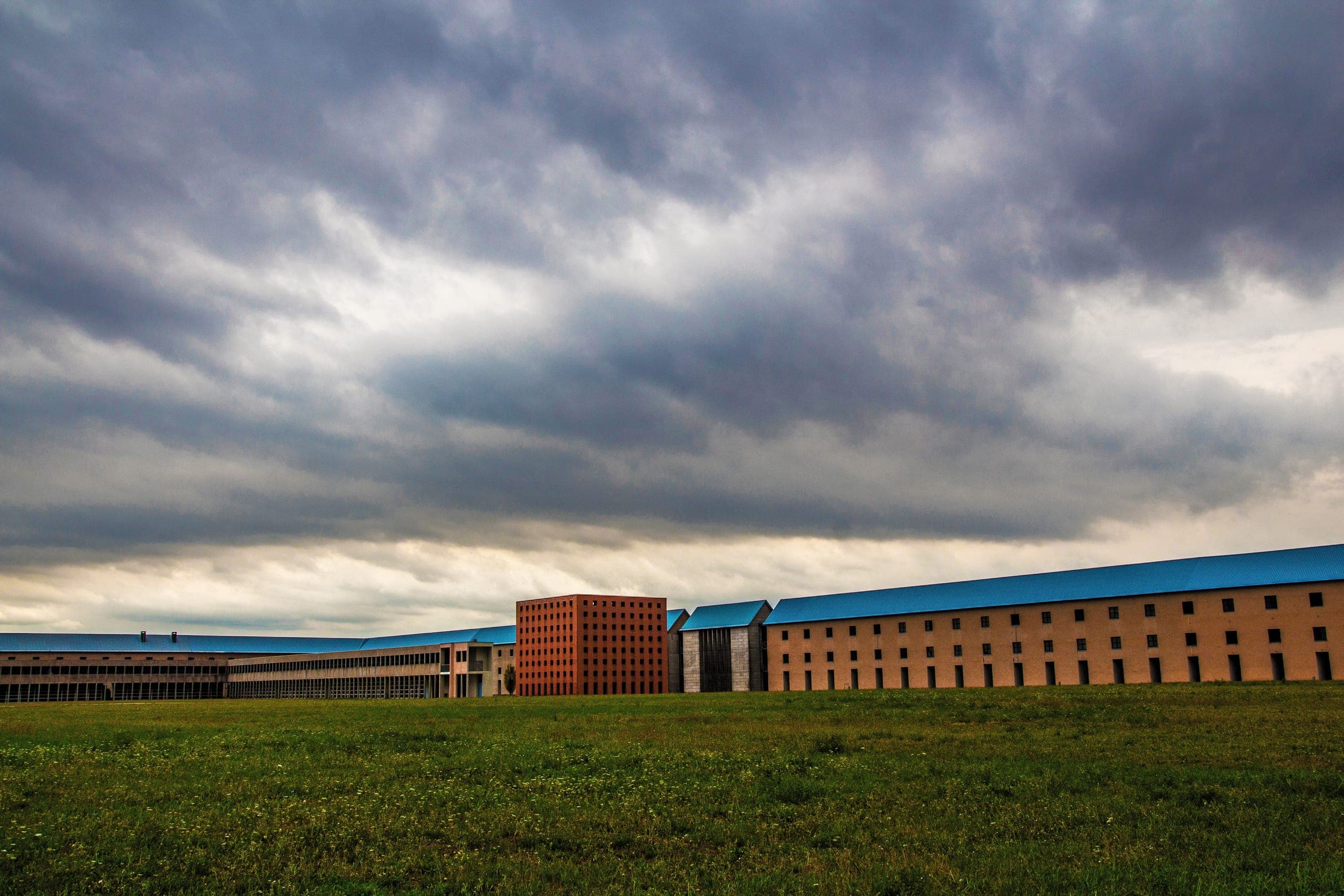
A second-day guide to hidden Modena: the synagogue, Aldo Rossi's cemetery, the metopes, the Estense masterpieces, secret canals and a balsamic loft.
Most visitors come to Modena for three things: the UNESCO cathedral, the Ferrari and Lamborghini museums, and the food. They see Piazza Grande, climb (or admire) the Ghirlandina, eat tortellini, taste balsamic, and leave delighted. They are right to — those are the headlines, and we wrote whole guides about them. But there is another Modena underneath the postcards, and it's the one we love best as locals. It's quieter, stranger and more personal: a synagogue at the heart of a vanished ghetto, a cemetery that became a milestone of modern architecture, eight medieval monsters carved in stone, a duke's art collection hung on a top floor, secret canals beneath the pavement, a balsamic loft in the attic of the town hall.
This is a guide to hidden Modena — the unusual, off-the-beaten-path sights for a second day, for repeat visitors, and for the simply curious. You can stitch these stops into a loose walking route through the centre, with two or three short hops just outside. None of it requires a car, and almost all of it is free or inexpensive. Think of it as the city behind the city: the layers a quick day trip never reaches. We welcome guests year-round in apartments right in the historic heart, so this is the Modena we point our own curious visitors towards once they've ticked off the famous names.
A different kind of itinerary
Before the stops, a word on how to use this. Hidden Modena is not a single trail but a set of layers, and you'll enjoy it more if you pick by mood than by map. Architecture lovers will want Aldo Rossi's cemetery and the Foro Boario; history readers, the ghetto and the metopes; art people, the Galleria Estense and the Bible of Borso d'Este; food obsessives, the balsamic lofts and the morning market at the unfashionable hour. Almost everything sits inside the compact centre, walkable in minutes, with just three or four short hops to the edges (the cemetery, the Pavarotti house, the old racetrack park). Below we group the stops so you can build your own afternoon — or your own second and third day.
A practical note that runs through all of it: the historic centre is a limited-traffic zone (ZTL), camera-enforced, so you'll be on foot anyway, which is exactly how these quieter corners reveal themselves. Many of the smaller museums keep reduced hours or close on Mondays, so it's worth checking the day before. And several of the best experiences here — a balsamic loft, the Palazzo Ducale, the monastery pharmacy — run on guided tours or booking, so a little planning goes a long way.
The synagogue and the former Jewish ghetto
Step off the corner of the cathedral square onto Piazza Mazzini, and you've entered one of the most atmospheric and least-visited parts of the city: the heart of Modena's former Jewish ghetto. For centuries this knot of narrow streets was home to a Jewish community that shaped the city's commerce and culture, confined here under the dukes and then emancipated in the 19th century.
The square is dominated by the Synagogue, built in 1873 and one of the largest in Italy. Its imposing neoclassical bulk — a dome and a temple-like front rising over the small piazza — was a statement of a newly free community taking its place in the open city. It still serves Modena's Jewish community today; visits are possible at certain times and on guided tours, and even from the square the building rewards a long look.
What we love most, though, is wandering the lanes around it. The old ghetto's streets are tight, shadowed and full of small clues if you know to look — door lintels, courtyard glimpses, the changing grain of the buildings. It's a layer of Modena that most visitors walk right past on their way between the Duomo and the shops, and one of the city's quietest, most moving corners. One of our own apartments sits right on Piazza Mazzini, beside the synagogue, so we send a lot of guests out into these streets at dusk, when the square empties and the stone goes gold.
San Cataldo: Aldo Rossi's cemetery and a Postmodern pilgrimage
If you care even a little about architecture, the single most surprising thing in Modena isn't medieval at all. It's a cemetery. The San Cataldo Cemetery, begun in 1971 to a design by the architect Aldo Rossi, is a pilgrimage site for architects and design students from around the world — and a place most casual tourists never hear about.
Rossi conceived San Cataldo as a "city of the dead" that mirrors the city of the living: an ordered, almost dreamlike landscape of ochre and blue-grey volumes. The centrepiece is a stark, roofless, windowless cube — an unfinished ossuary that Rossi called the "house of the dead" — flanked by long colonnaded ranks of niches that march away in severe perspective. There are no ornaments, no comforting symbols, just pure geometry and colour, hovering somewhere between a building, a memory and a drawing.
That deliberate strangeness is precisely why it matters. San Cataldo is considered one of the founding buildings of Postmodern architecture, the moment a generation turned away from the cool functionalism of the modern movement towards memory, type and the emotional weight of form. It appears in architecture textbooks the world over. Visiting in person — quietly, respectfully, as you would any cemetery — is a strangely powerful experience: melancholy, monumental and unforgettable. It sits just outside the centre and is reachable on foot for the energetic or by a short bus or taxi ride. Go in the late-afternoon light, when the ochre walls seem to glow.
The metopes and the Lapidary Museum
Back in the centre, beside the cathedral, hides one of Modena's most enigmatic treasures — and one almost everyone misses. The metopes are a set of eight small Romanesque sculptures carved with fantastic, monstrous beings: hybrid creatures, figures with strange anatomies, beasts that seem to belong to the edges of the medieval imagination. They were made by an anonymous artist known only as the "Master of the Metopes", a follower of the great sculptor Wiligelmo, around the 12th century.
Originally the metopes sat high up on the gables of the cathedral, looking out over the city — guardians, or warnings, or simply images of the unknown world beyond the ordered Christian one. To protect them from the weather, the originals were brought inside and replaced on the building by copies. You can now see the real eight in the Lapidary Museum, part of the Musei del Duomo (the cathedral museums, which also include the Cathedral Museum with its treasury). Standing in front of them is like reading the dreams of a 12th-century mind: beautiful, unsettling and completely unlike the orderly Bible scenes on the façade. For anyone who loves the Duomo — and we go deep into it in our guide to the Duomo of Modena — the metopes are the secret second act.
While you're thinking medieval, look again at the cathedral's Porta della Pescheria on the north side: its carvings include the King Arthur cycle, the first carved Arthurian scene in Italy, alongside the labours of the twelve months. It's hidden in plain sight, on the quiet side of the building most people never round.
The Acetaia Comunale: a balsamic loft in the town hall attic
Here is a piece of Modena so unlikely it feels invented: the city's town hall makes its own traditional balsamic vinegar in the attic. The Acetaia Comunale — the municipal balsamic loft — sits in the roof of the Palazzo Comunale on Piazza Grande, a working "battery" of small barrels in different woods, slowly ageing the city's liquid gold the same way families have for centuries.
Visiting it (on selected days and on guided tours) is one of the most charming half-hours in Modena. You climb up into the loft of the town hall, surrounded by little barrels of oak, cherry, chestnut, mulberry and juniper, and learn how Aceto Balsamico Tradizionale di Modena DOP is made: from cooked grape must alone, aged a minimum of twelve years — twenty-five for the Extravecchio — and transferred each year from barrel to barrel in the ritual the locals call the rincalzo. It's the real thing, sold only in the little spherical 100 ml bottle designed by Giorgetto Giugiaro, and worlds away from the cheap "balsamic" sold abroad. We unpack the whole story in our guide to balsamic, Modena's black gold.
While you're in the Palazzo Comunale, look for two more curiosities: the Sala del Fuoco, frescoed by Nicolò dell'Abate in 1546, and out in the square the medieval Preda Ringadora, the old speaker's stone, and the enigmatic statue of the Bonissima at the corner of the building, a civic symbol whose true meaning is still happily argued over.
The Galleria Estense: a small gallery with world-class secrets
Modena was for centuries the capital of the Este dukes, and they left behind one of Italy's great small art collections — yet the Galleria Estense sees a fraction of the crowds it deserves. It lives on the top floor of the Palazzo dei Musei, and for art lovers it is the single best hidden reason to give Modena a second day.
The hit list reads like a who's who of European painting and sculpture. There's Velázquez's Portrait of Francesco I d'Este, the Spanish master's only painting of the duke; right beside the subject's likeness in marble, Bernini's bust of the very same Francesco — a rare chance to see two of the 17th century's greatest artists portraying one man in two media. There's El Greco's Modena Triptych, a small, jewel-like devotional work; a tender Correggio Madonna; and a powerful Guido Reni Crucifixion. For a gallery this compact, the density of masterpieces is astonishing, and you'll often have the rooms nearly to yourself.
In the same building lies an even rarer treasure: the Biblioteca Estense keeps the Bible of Borso d'Este, one of the most exquisitely illuminated manuscripts ever produced — page after page of gold, jewel colours and impossibly fine miniatures, a glittering high point of the Italian Renaissance. Seeing it (when on display) is the kind of quiet, breath-catching encounter that the famous Italian cities make almost impossible. This is why we tell curious guests not to treat Modena as a stopover: the things worth seeing in Modena go far deeper than the headline sights.
The Casa Museo Luciano Pavarotti
Modena gave the world one of its greatest voices, and you can visit the great tenor at home. The Casa Museo Luciano Pavarotti, on the edge of the city at Stradello Nava 6, is the house where Luciano Pavarotti lived, kept much as he left it: his costumes, his awards, his piano, his personal collections and the warm domestic clutter of a man who was, beneath the global fame, deeply Modenese.
It's an unexpectedly moving and intimate place — not a grand monument but a home, full of the personality of someone who loved food, horses, painting and his city as much as he loved opera. The house is open daily, typically 10:00–18:00, with tickets around €12 (reduced about €10, under-12s free); it's a short hop from the centre and an easy, rewarding addition to a hidden-Modena day. Combine it, if you can, with a sense of how the man's voice and the city's table belong to the same warm tradition — something you'll taste in our guide to the flavours of Modena.
The Orto Botanico: a duke's garden from 1758
Tucked into the city is a green secret most visitors never find: the Orto Botanico, Modena's botanical garden, founded in 1758 by Duke Francesco III d'Este. It's one of the older botanical gardens in Italy, born in the Enlightenment spirit of cataloguing and studying the natural world, and today still tied to the university.
Wandering its glasshouses and beds — historic medicinal plants, exotic species, quiet shaded corners — is a lovely, free way to step out of the sightseeing rhythm for half an hour. It's the kind of place locals bring a book, not a camera, and it makes a perfect breather between two heavier cultural stops. Opening times can vary with the seasons and the academic calendar, so it's worth checking before you go, but on the right afternoon it's one of the most peaceful pockets in the whole city.
Parco Enzo Ferrari: where Ferraris once raced
Here's a piece of hidden Motor Valley that has nothing to do with a museum. The vast Parco Enzo Ferrari — over 400,000 square metres of green on the city's flank — was, in the 1950s, a racetrack where Ferraris actually raced. Today it's Modena's green lung: lawns, tree-lined paths, a lake, joggers and families, and in summer a venue for concerts and events.
There's something quietly thrilling about knowing that under these peaceful walkways once roared the engines that made Modena a legend. For motor pilgrims who've done the Ferrari and Lamborghini museums, the park closes the loop: it's where the city's love affair with speed lived out in the open, before it became polished heritage behind glass. Bring a coffee, walk a lap, and imagine the dust and the noise.
The fossi: Modena's secret canals
Walk the centre and you'd never guess that water once ran everywhere beneath your feet. Modena was a city of canals — the fossi, a network of medieval waterways that powered the mills, served the tanneries and dye-works, and stitched the city to the rivers around it. Over the centuries most were covered over and built upon, vanishing under the streets, but the water-Modena is still there in name and trace.
Look for the clues: street names that recall the old waterways, the line of a buried canal you can read in the layout of a lane, the occasional opening where a stretch of the old channel still shows. It's a Modena that very few people know — the hydraulic, working city beneath the monumental one — and once you start noticing it, the centre reads differently. Ask us when you stay, and we'll point you to the spots where the fossi still come up for air.
The porticoes and hidden courtyards
Modena isn't as famous for its porticoes as neighbouring Bologna, but it's quietly laced with them — covered walkways, low arcades and shaded passages that the locals use as a matter of course and visitors barely notice. They're the city's circulatory system: you can cross much of the centre in the shade in summer or out of the rain in winter, slipping under one arcade after another.
The real reward, though, is what hides behind the street doors. Push gently at an open portone (respectfully — many are private) and you'll catch glimpses of hidden courtyards: silent inner squares, old wellheads, loggias, a single tree, the back of a noble palace turned inward away from the street. The grandest is the courtyard of the Foro Boario (below), but half the pleasure of hidden Modena is simply slowing down, looking up at the arcaded ceilings and into the courtyards as you pass. It's the texture of the city that no monument can capture.
The Foro Boario: a duke's portico turned university
On the edge of the historic centre, facing the Parco Novi Sad, stands a monumental building most visitors never identify: the Foro Boario. Commissioned in 1833 by Duke Francesco IV d'Este and designed by the Modenese architect Francesco Vandelli, it was conceived as a grand porticoed structure over 250 metres long — originally a livestock market and parade-ground portico, later a barracks. Its long arcaded wings and monumental central loggia are a striking, slightly austere piece of 19th-century architecture, very different from the medieval centre.
Today the Foro Boario has a new life: it houses the "Marco Biagi" Department of Economics of the University of Modena and Reggio Emilia, and parts of it have served as exhibition space for photography. For lovers of architecture and adaptive reuse, it's a fascinating stop — a ducal monument that became a working part of the modern city, its great courtyard and porticoes now crossed by students rather than cattle. It pairs naturally with a wander through the adjacent Parco Novi Sad, especially on a market day.
The Abbazia di San Pietro and its monastic pharmacy
A short walk from Piazza Grande, the church and monastery of San Pietro is one of Modena's loveliest, least-touristed corners — a great urban Benedictine abbey hiding in plain sight. A monastery has stood here since the late 10th century; the present monumental complex was begun around 1475–76 and remains the largest church complex in the city, with serene cloisters and terracotta sculptures by Antonio Begarelli, the Modenese master who also worked in the cathedral.
The real hidden gem, though, is the Spezieria Monastica — the monastery's historic pharmacy. For centuries this was a centre of medical and pharmaceutical care for the whole duchy, closed in 1796 and beautifully reopened in 2007. Today the Benedictine fathers also keep their own acetaia, producing traditional balsamic vinegar in the monastery, and run free guided tours of the pharmacy and the balsamic loft (Via San Pietro 7). It's a genuinely off-the-radar experience — incense, old apothecary jars, the slow craft of vinegar and the calm of a working monastery — and one of the most authentic things you can do in the city. As with all visits here, opening times can change, so check ahead before you go.
The Palazzo Ducale, on a weekend tour
Modena's most imposing palace is also, for most of the week, firmly closed to visitors — which is exactly what makes seeing it a hidden-Modena coup. The Palazzo Ducale, one of the grandest Baroque palaces in Italy and the former seat of the Este court, is today home to the Military Academy. You can only step inside on guided tours at weekends, and only with a booking made in advance.
Do make the effort. Behind the vast façade lie gilded halls, the great ceremonial staircase and the Honour Courtyard, an interior world of ducal splendour that the city's daily life flows right past. Because access is so restricted, the tour has the feel of being let in on a secret. Plan ahead, secure your slot, and you'll see a Modena that most people, even repeat visitors, never do.
The Novi Sad flea and vintage market
For a completely different kind of treasure hunt, time your visit around the Parco Novi Sad market. The park hosts a large general market every Monday, but the real draw for collectors and the curious is the big flea and vintage market held on the third Sunday of each month.
It's a sprawling, atmospheric affair — stalls of antiques, old furniture, vinyl, vintage clothing, bric-a-brac, books and the kind of beautiful junk that makes for the best souvenirs. Even if you buy nothing, it's a wonderful window onto everyday Modenese life: rummaging locals, bargaining, espresso breaks, and the slow pleasure of looking. Right beside the monumental Foro Boario, it makes a perfect lazy-Sunday pairing on a second or third day in the city.
The secret of the Ghirlandina: the Secchia Rapita
Everyone photographs the Ghirlandina, the nearly 89-metre tower that is the symbol of Modena. Far fewer know the strange treasure it guards. Inside the tower, in the Hall of the Torresani on the fifth floor, is kept the Secchia Rapita — the "Stolen Bucket": an old wooden bucket that, legend says, Modenese soldiers carried off from Bologna as a trophy of war.
The story sits at the heart of the centuries-old rivalry between Modena and Bologna, recalling the Battle of Zappolino in 1325, and it became so beloved that the poet Alessandro Tassoni turned it into a celebrated mock-epic poem, La Secchia Rapita. That a humble bucket should be enshrined in a UNESCO bell tower, and immortalised in literature, tells you everything about the Modenese sense of humour and pride. (What's displayed in the tower is generally a copy, with the precious original carefully preserved.) When you climb or admire the Ghirlandina, you're standing beside one of Italy's most charming pieces of civic mythology — the perfect hidden footnote to the famous skyline.
A balsamic loft visit: the most local thing you can do
We've mentioned balsamic twice already, but a proper acetaia visit deserves its own line, because it's the single most local, most memorable hidden experience in Modena — and the one furthest from the tourist trail. Forget the souvenir-shop bottles. The real thing is made in the lofts of family homes, in batteries of small barrels passed down through generations, and tasted straight from the cask with the producer telling you the story of each barrel.
You have several routes in: the Acetaia Comunale in the town hall attic; the famous historic estates like Acetaia Giusti, the oldest in Italy with around 400 years of history, which opens its ageing cellars and museum for tours; the monastery acetaia at San Pietro; and, in September, the wonderful Acetaie Aperte event, when family lofts across the area throw open their doors for a single weekend. Tasting a twelve-, twenty-five- or forty-year-old vinegar on a spoon, on a flake of Parmigiano, even on vanilla ice cream, is the kind of thing you'll talk about long after the trip. It's the flavour of hidden Modena, distilled.
How to build your hidden-Modena day
To turn all this into a real plan, here's how we'd thread it together for a second day in the city:
- Morning: start with the Galleria Estense and the Bible of Borso d'Este in the Palazzo dei Musei, when the rooms are coolest and quietest. Walk back through the centre and detour onto Piazza Mazzini for the synagogue and the old ghetto streets.
- Midday: dip into the Lapidary Museum for the metopes, then take a slow lunch — and, if it's a visiting day, climb to the Acetaia Comunale in the town hall, or walk to San Pietro for the monastery pharmacy and its balsamic loft.
- Afternoon: make one hop to the edge — Aldo Rossi's San Cataldo cemetery for architecture, the Casa Museo Pavarotti for music, or the Parco Enzo Ferrari and Foro Boario / Novi Sad for green space and (third Sunday) the flea market.
- Golden hour: wander the porticoes and courtyards, hunt the traces of the fossi, and end with an aperitivo of Lambrusco somewhere the locals go.
Two practical reminders. First, several of the best stops — the Acetaia Comunale, the Palazzo Ducale, the San Pietro pharmacy and any acetaia — run on guided tours or booking, so check days and reserve where you can. Second, prices and hours change, so always confirm with the official source before you set out.
Where to stay: the centre, booked direct
The whole point of hidden Modena is that it rewards slow, repeated, on-foot exploration — which is exactly why staying right in the historic centre changes the trip. When you're based in the heart of the city, the synagogue, the Estense gallery, the metopes, the porticoes and the wine bars are all a few minutes from your door, and you can drift back out at dusk, when the day-trippers have gone and the stone turns gold, to wander the ghetto streets or chase the line of an old canal.
Our apartments are all in central Modena, each a short walk from the famous sights and the hidden ones alike — including one right on Piazza Mazzini, beside the synagogue, in the heart of the former ghetto. You book directly with us, with no booking-platform commissions, and because we live here, we're always glad to share the corners that don't make the guidebooks: which acetaia to visit, where the fossi surface, which courtyards to peek into. Take a look at our apartments in Modena, or read our guide to where to stay in Modena, and make the curious city your own.
Frequently asked questions
What are the most unusual things to see in Modena? Beyond the cathedral and the Ferrari museums, Modena's most unusual sights include the synagogue and former Jewish ghetto on Piazza Mazzini, Aldo Rossi's San Cataldo cemetery (a landmark of Postmodern architecture), the medieval metopes in the Lapidary Museum, the municipal balsamic loft in the town hall attic, the 1758 botanical garden, and the medieval canals (the fossi) that once ran beneath the streets.
Is Modena worth a second day? Yes. One day covers Piazza Grande, the Duomo, the market and a great meal. A second day lets you go deeper into the quieter, stranger Modena: the Estense art gallery with its Velázquez and Bernini, the synagogue, Aldo Rossi's cemetery, the Pavarotti house, a balsamic loft visit and the porticoed back streets most tourists never reach.
Can you visit a balsamic vinegar loft in Modena? Yes. The town hall has its own municipal balsamic loft (the Acetaia Comunale) in the attic, open on selected days. Family-run acetaie around the city open their ageing lofts for tours and tastings, and the Benedictine monastery of San Pietro runs free guided tours of its historic pharmacy and balsamic loft. The September Acetaie Aperte event opens many estates in one weekend.
Who designed Modena's San Cataldo cemetery? The San Cataldo cemetery was designed by the architect Aldo Rossi from 1971. Its haunting ochre-and-grey forms — an unfinished cube and a long colonnade of the dead — make it one of the founding works of Postmodern architecture and a quiet pilgrimage site for architecture lovers, a short distance from the centre.
What are the metopes of Modena? The metopes are eight small Romanesque sculptures of fantastic, monstrous beings carved by the "Master of the Metopes", a follower of Wiligelmo, around the 12th century. Originally placed on the gables of the cathedral, the originals are now kept in the Lapidary Museum (Musei del Duomo), with copies on the building. They are among Modena's most enigmatic medieval treasures.
Where was Modena's Jewish ghetto? Modena's former Jewish ghetto centred on today's Piazza Mazzini, beside the cathedral. The grand synagogue, built in 1873 and one of the largest in Italy, still stands on the square. The narrow streets around it preserve the memory of a community that lived here for centuries — a moving, lesser-known layer of the city.
How do you reach the hidden corners of Modena without a car? Almost everything is walkable. The synagogue, the Estense gallery, the metopes, the balsamic loft and the porticoed back streets are all within the compact centre, a short stroll from one another. The San Cataldo cemetery and the Pavarotti house sit just outside and are reachable on foot or by a short bus or taxi ride.
Frequent questions
What readers ask us most.
What are the most unusual things to see in Modena?
Beyond the cathedral and the Ferrari museums, Modena's most unusual sights include the synagogue and former Jewish ghetto on Piazza Mazzini, Aldo Rossi's San Cataldo cemetery (a landmark of Postmodern architecture), the medieval metopes in the Lapidary Museum, the municipal balsamic loft in the town hall attic, the 1758 botanical garden, and the medieval canals (the fossi) that once ran beneath the streets.
Is Modena worth a second day?
Yes. One day covers Piazza Grande, the Duomo, the market and a great meal. A second day lets you go deeper into the quieter, stranger Modena: the Estense art gallery with its Velázquez and Bernini, the synagogue, Aldo Rossi's cemetery, the Pavarotti house, a balsamic loft visit and the porticoed back streets most tourists never reach.
Can you visit a balsamic vinegar loft in Modena?
Yes. The town hall has its own municipal balsamic loft (the Acetaia Comunale) in the attic, open on selected days. Family-run acetaie around the city open their ageing lofts for tours and tastings, and the Benedictine monastery of San Pietro runs free guided tours of its historic pharmacy and balsamic loft. The September Acetaie Aperte event opens many estates in one weekend.
Who designed Modena's San Cataldo cemetery?
The San Cataldo cemetery was designed by the architect Aldo Rossi from 1971. Its haunting ochre-and-grey forms — an unfinished cube and a long colonnade of the dead — make it one of the founding works of Postmodern architecture and a quiet pilgrimage site for architecture lovers, a short distance from the centre.
What are the metopes of Modena?
The metopes are eight small Romanesque sculptures of fantastic, monstrous beings carved by the 'Master of the Metopes', a follower of Wiligelmo, around the 12th century. Originally placed on the gables of the cathedral, the originals are now kept in the Lapidary Museum (Musei del Duomo), with copies on the building. They are among Modena's most enigmatic medieval treasures.
Where was Modena's Jewish ghetto?
Modena's former Jewish ghetto centred on today's Piazza Mazzini, beside the cathedral. The grand synagogue, built in 1873 and one of the largest in Italy, still stands on the square. The narrow streets around it preserve the memory of a community that lived here for centuries — a moving, lesser-known layer of the city.
How do you reach the hidden corners of Modena without a car?
Almost everything is walkable. The synagogue, the Estense gallery, the metopes, the balsamic loft and the porticoed back streets are all within the compact centre, a short stroll from one another. The San Cataldo cemetery and the Pavarotti house sit just outside and are reachable on foot or by a short bus or taxi ride.
Stay in the centre, see Modena on foot.
All our apartments are inside the historic centre: step out of the door and you are already in the middle of what you have just read about. No restricted-traffic zone to decode, no parking to hunt for every morning.