Emilia Romagna Food Trip: A Week by Train, Based in Modena
FNFrancesco NoliThe short answer
Modena works as a single base for an Emilia Romagna food trip because it sits in the middle of the line: Reggio Emilia is 12 to 16 minutes away by regional train, Bologna 22 to 33, Parma 27 to 38, none of them costing more than €6.30 one way. Three days cover Modena, Bologna and one producer; five add Parma and Reggio Emilia; seven reach Ferrara. Book dairy visits for the morning, when the milk is actually worked, and avoid the first three weeks of August, when family-run kitchens across the region close for the summer.
A week of eating across Emilia Romagna by train from a single base, with real fares, journey times, producer opening hours and the month to avoid.
Emilia Romagna is not a region you tour. It is four cities in a row on the same Roman road, twenty minutes apart, each protective of one or two things they make better than anyone else. The mistake almost every itinerary makes is to change hotel every night, turning a trip about eating into a trip about luggage.
We host in Modena, and this is the version we give guests who ask whether the whole thing can be done on trains. It can. What follows has the fares, the journey times, the days the producers are shut and the month to stay away, checked in August 2026 against the operators' own sites and linked. Timetables move: check before you build a day around one.
The case for Modena as a base — and where it falls down
The argument is geometric, not sentimental. The via Emilia is a straight Roman road, and Parma, Reggio Emilia, Modena and Bologna sit along it in that order.
From Modena, all three of the others are under 40 minutes by regional train. From Bologna, Parma takes 51 minutes to 1 hour 14. Bologna is at the end of the line; Modena is in the middle of it. (Second-class regional services, checked on Trenitalia for a weekday in September 2026.)
Then the producers. Traditional balsamic vinegar can only legally be made in the province of Modena — the Reggio Emilia version is a separate protected product — so the twelve- and twenty-five-year barrels are not something you see elsewhere, and the Parmigiano dairies start a few kilometres out. Bologna takes several times Modena's visitor numbers, and you feel the difference at 8pm on a Saturday when you have not booked.
Now the honest part. If your trip is two nights, stay in Bologna: it has the airport, the last trains, an evening that continues after 10pm and more open on a Sunday night, and with two nights you are not making day trips anyway. Modena earns its keep from the third night on, when you start moving.
The line, city by city
Fares are one-way, second class, on regional trains — the fixed-price ones.
| City | What you go there to eat | Train from Modena | Fare |
|---|---|---|---|
| Reggio Emilia | Erbazzone, Parmigiano Reggiano, Lambrusco Reggiano | 12–16 min | €3.70 |
| Bologna | Tortellini in brodo, tagliatelle al ragù, mortadella | 22–33 min | €4.50 |
| Parma | Prosciutto di Parma, Culatello di Zibello, torta fritta | 27–38 min | €6.30 |
| Ferrara | Cappellacci di zucca, salama da sugo, coppia ferrarese | 1h11–1h42, change at Bologna | €8.50 |
| Modena (base) | Tortellini, gnocco fritto, traditional balsamic, Lambrusco | — | — |
One line explains the structure of the whole trip: Parma to Ferrara takes 2 hours to 2 hours 22 and costs €13.30. The two ends of the via Emilia are not neighbours, and an itinerary that runs the length of the region while changing hotels nightly is selling you four hours on a platform.
A word for Reggio Emilia, the city visitors skip. Erbazzone reggiano — a two-crust savoury pie of chard or spinach, breadcrumbs and Parmigiano aged at least 24 months — won IGP protection in 2026, the most recent addition to a regional list of protected foods that is the longest in Italy. A slice from a bakery counter costs about the same as a coffee.
How many days you need
Three days. Modena on foot, one day in Bologna, one producer visit — everything inside 35 minutes of the front door. The one we see most often, and it works.
Five days. Add Parma and Reggio Emilia: four cities' worth of eating from one set of keys.
Seven days. Add Ferrara, which does not fit a short trip because of the change at Bologna, plus a day for Maranello or the foothills around Castelvetro.
Getting there from the UK
You fly to Bologna Guglielmo Marconi. Its own site lists direct services to three London airports: Heathrow with British Airways, Stansted and Luton with Ryanair. Route databases also show Manchester, and Edinburgh as a seasonal summer-to-autumn service, both Ryanair — confirm those two with the airline for your dates.
Do not be tempted by a cheap fare into Milan: from Malpensa the train to Modena takes three to four hours with a change, and from Bergamo Orio al Serio longer still. Bologna does it in under an hour.
From Bologna airport to Modena, two options and no wrong answer:
- Marconi Express monorail plus regional train. Terminal to Bologna Centrale in 7 minutes for €12.80, every day from 5:40am to midnight; then the train, and about an hour door to door. Between midnight and 5:40am, bus line Q covers the monorail route.
- Aerbus direct coach. €17.00 one way, €28.00 return, twelve departures a day between 04:20 and 00:30, luggage free, 5% off paying by card online. Slower, but it is one vehicle with your suitcase in the hold, and at 5am that wins.
Both are compared in detail, with the late-night connections, in getting to Modena.
The trains: fares, frequency, and the rule that catches people out
Regional trains have a fixed fare per route. Modena to Bologna is €4.50 whether you buy three months out or eight minutes before departure, so this trip needs no advance ticket planning. High-speed Frecce are the opposite: the same journey takes 26 minutes and starts around €16.00 — eleven euros to save nothing.
City to city, off the base: Bologna to Parma €8.50, Bologna to Reggio Emilia €7.20.
Frequency is what makes a base work. On a weekday in September there are more than 50 services from Modena to Bologna, the first at 06:06 and the last at 00:05, eight of them between 9 and 11 in the morning. You turn up and go.
The rule that catches British visitors: a paper regional ticket must be validated before you board, in the machine at the platform entrance. Buy through the Trenitalia app and there is nothing to validate — which removes the only fine most people collect on this trip.
Modena's station is a ten-minute walk from the centre, flat the whole way, so skip the taxi.
The producers: what you can actually walk into
Most itineraries list producers without saying when the thing you came to see actually happens.
Parmigiano Reggiano: a morning, or nothing
The copper vats are lit at about 5am and the wheel comes out of the whey around 9. By lunchtime the cheese-making is over and only the ageing store remains — impressive, not the same thing. 4 Madonne, the co-operative we send guests to, states plainly that on afternoon tours the milk-working is not visible.
Visits run daily, by reservation only, in Italian and English, about an hour, and cost €22 for adults at its Lesignana site and €25 at Baggiovara, both a few kilometres outside Modena. This is countryside with no useful bus, so solve the transport first: the dairies, the booking and the taxi problem are in visiting a Parmigiano Reggiano dairy.
Balsamic vinegar: the one visit you can do without leaving town
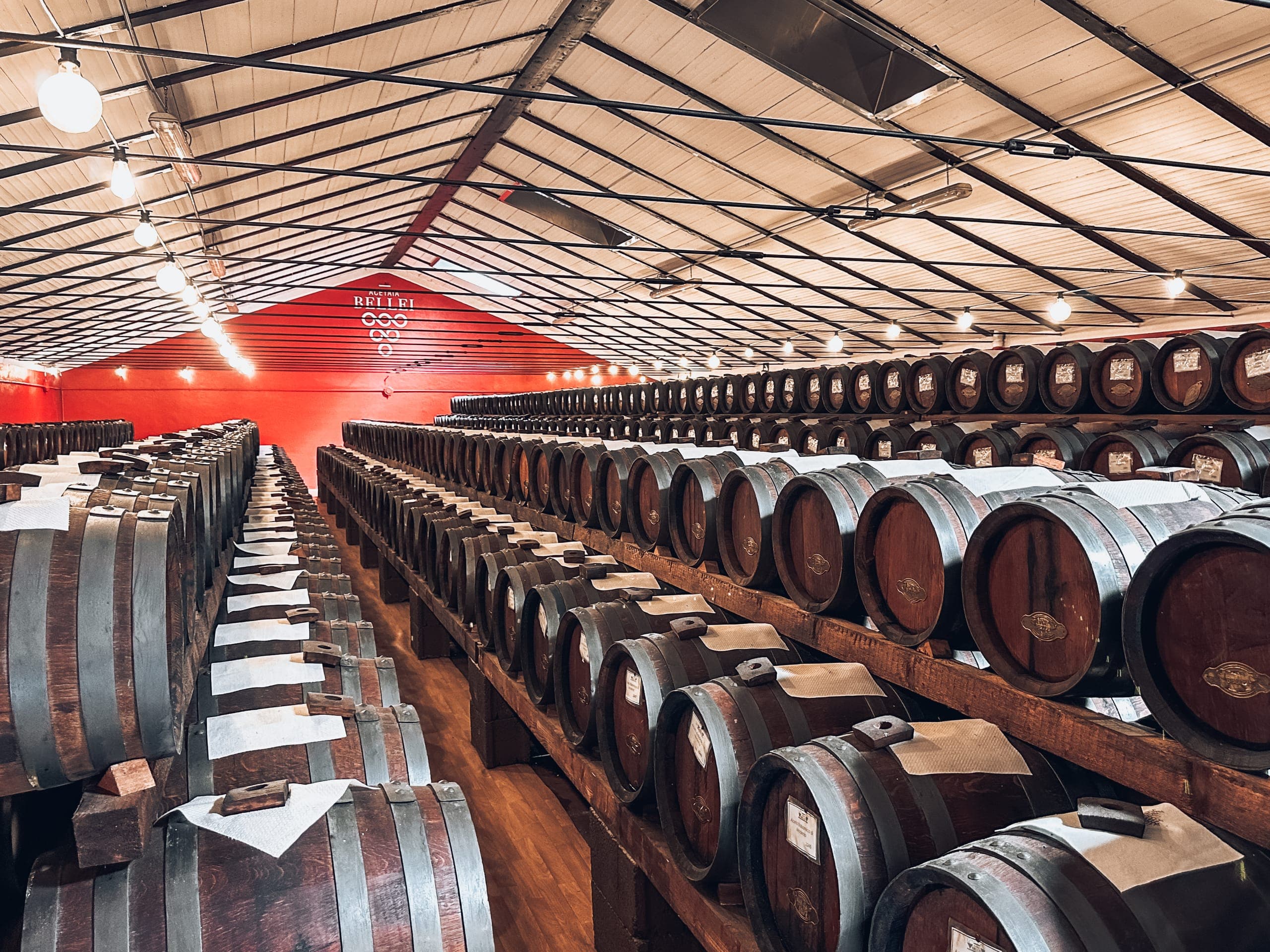
The cheapest introduction is the Acetaia Comunale, the municipal loft in the attic of the town hall on Piazza Grande: €5.00, free for under-12s and for disabled visitors with a companion. Booking is compulsory, groups capped at 20. Times, from VisitModena: Fridays at 15:30 and 16:30; Saturdays, Sundays and public holidays at 10:30, 11:30, 15:30 and 16:30 — and, the detail to diarise, an English-language tour every Saturday at 14:30.
For a private loft in the countryside — Giusti, Pedroni, Malpighi and around forty others — booking is always required and hours are set family by family. Which one suits which kind of visitor, and what each charges, is in the balsamic vinegar tours guide.
The date to keep: Acetaie Aperte, when over forty lofts open at once, traditionally falls on the last Sunday of September — 27 September in 2026 (acetaieaperte.com, which still showed only the 2025 edition when we checked). The Parmigiano equivalent, Caseifici Aperti, ran on 23 and 24 May 2026 and the Consortium has not published a next date — so book an individual dairy rather than waiting for an open day.
Parma ham: the honest warning
The ham factories are at Langhirano, 20 to 25 km south of Parma, in hills with thin public transport. Most take bookings well in advance and many operate in Italian only: without a car this is the hardest producer to reach, and we would rather say so. The exception is the Festival del Prosciutto di Parma, whose 2026 edition runs 4 to 6 September with the "Finestre Aperte" scheme opening producers' doors — the programme was still being finalised when we checked in August 2026, so confirm before building travel around it.
The Food Museums of Parma province: check the day before you go
Ten small museums, one product each: Parmigiano Reggiano at Fontevivo (it moved there in June 2026, having been at Soragna for years), pasta at Soragna, tomato at Collecchio, wine at Sala Baganza, salame at Felino, ham at Langhirano, culatello at Zibello, porcini at Borgotaro, truffle at Albareto and a city-wide "taste" museum in Parma itself. Excellent, with one trap: the standard calendar is Saturdays, Sundays and public holidays only, 10:00 to 18:00, running from late February to 8 December. The porcini museum keeps longer weekday hours from July to September, and individual sites change, so check museidelcibo.it before you go rather than a date you read elsewhere.
Five nights from one base, day by day
A shape, not a schedule, with the timing already solved.
| Day | Where | The constraint that decides it |
|---|---|---|
| 1 | Modena on foot: Piazza Grande, the cathedral, the Ghirlandina, then the Mercato Albinelli | The stalls run Monday to Saturday from 7am and the shutters come down over lunchtime; treat 14:00 as the deadline |
| 2 | A Parmigiano dairy in the morning, balsamic in the afternoon | Book the dairy for 8 or 9am to see the wheel come out of the vat |
| 3 | Bologna: porticoes, the Quadrilatero, tortellini in brodo | Last train back after midnight, so no rush — and no Bologna room rate |
| 4 | Parma for ham and culatello, stopping at Reggio Emilia on the way home | Food museums open weekends only; the Reggio stop costs €3.70 and forty minutes |
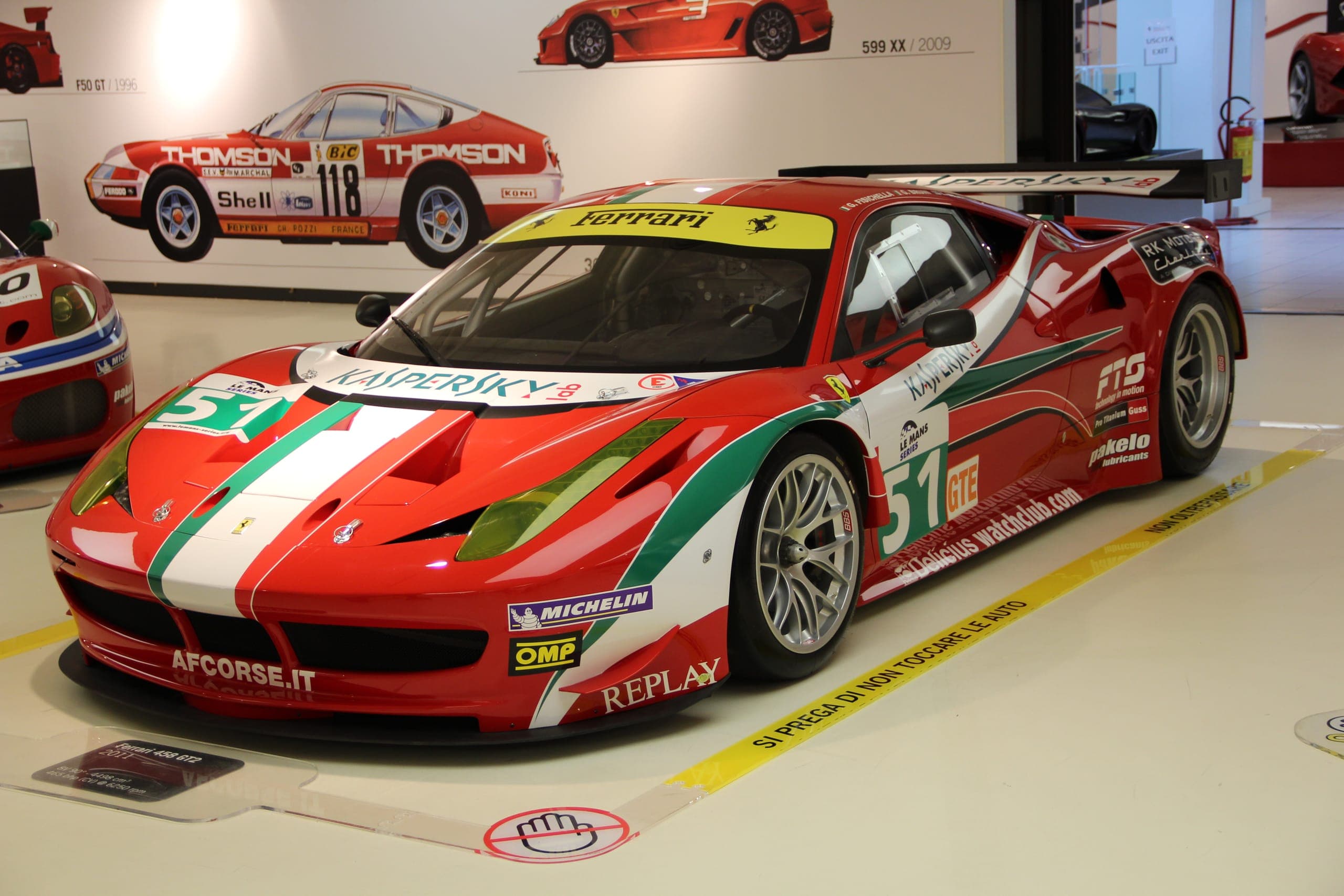
| 5 | Castelvetro for Lambrusco Grasparossa, Maranello for the Ferrari museums, or a long lunch | None. Every guest wants a day like this and almost nobody schedules one |
Day 2 is the one guests write to us about afterwards.
When to come — and the month to avoid
This is flat river plain, not the Italy of the brochures: summers humid and heavy, winters cold and grey, little sun between mid-October and February, and November the wettest month.
| Period | What it is like | Verdict |
|---|---|---|
| March–May | Cool, changeable, producers all open | Good, and quiet |
| June–July | Hot and humid, 34–35°C is normal | Workable if you eat at midday |
| 1–20 August | Family-run restaurants and shops closed | Avoid |
| Late Aug–mid Sept | Everything reopens, festival season starts | Very good |
| Late Sept–Oct | Grape harvest, open days, weather broken | Best |
| November | Wettest month; truffles and mushrooms; empty | Good if rain is fine |
| Dec–Feb | Around 0°C by day in midwinter, damp, grey | For cooking indoors |
August is the mistake, and it is also the month British travellers most often book flights to Bologna. From roughly the 1st to the 20th, and comprehensively on the 15th, the businesses that make this region worth visiting shut for their own holidays — not the chains, but the four-table trattoria whose owner rolls the pasta. Arrive on the 5th, leave on the 20th, and you will conclude the food was overrated.
Late September is the best window and the busiest. In 2026: the Parma ham festival from the 4th, Festivalfilosofia in Modena from 18 to 20 September — theme chaos, three cities, everything free and nothing booked — Cersaie in Bologna from the 21st to the 25th, and Acetaie Aperte on the 27th.
That Cersaie date matters more than it looks: BolognaFiere trade fairs empty Bologna's hotel market in precise weeks, and Cersaie is one of the largest of them. Check the calendar before booking a room in Bologna — and, based in Modena, largely ignore it.
What it costs, and the two numbers worth checking
Room prices are the figure everyone wants and the one we will not give: the only numbers available come from aggregators that contradict each other. Two costs do have official sources, and both favour Modena.
Tourist tax. Bologna charges by room price band, per person per night: €4.00 up to €30.99 a night, €5.80 to €70.99, €6.50 to €120.99, €7.00 above that; campsites and hostels €2.80, under-14s exempt (Bologna Welcome). Modena's schedule, in force since 1 July 2025 (Comune di Modena), runs from €1.50 in a one-star to €4.00 in a four-star, with holiday apartments and B&Bs between €2.50 and €4.00, and stops after a set number of consecutive nights. Five nights for two in a four-star: €40 in Modena, up to €70 in Bologna. Small money, but the one comparison with a municipal source on both sides — and rates get revised, so check the links.
Everything else: lunch in a historic trattoria is €25 to €35 a head for a first course, a second, water and a glass of wine; a board of gnocco fritto with cured meats and a glass, €15 to €25; Lambrusco in a wine bar, €4 to €6. The train fares for the whole trip will not reach £50.
What surprises British visitors at the table
- The coperto. €2 to €3 per person, printed on the menu, covering bread and the table. Standard, not a service charge, not a scam.
- Tipping is not expected and service is not added. Rounding up after a meal you loved is generous.
- Dinner starts at 7:30 or 8pm. Arrive at 6:30 and you find a locked door. Lunch runs roughly 12:30 to 2:30, and Modena's trattorie take it more seriously than dinner — several open at midday only.
- Pay in euros, not pounds. If the card machine offers to charge you in sterling, decline. Cards work almost everywhere; the smallest trattorie prefer cash. Where to eat in Modena has the rest of it, restaurant by restaurant.
What is not worth doing, and who this trip is wrong for
- Do not change hotel every night. It costs two hours a day in check-ins and platforms, in a region where nothing is more than half an hour apart.
- Do not build three days around Ferrara. A fine Renaissance city with its own food, but on a different railway line: it belongs in a week, not a long weekend.
- This is not a trip for fussy eaters or for most vegetarians. Pork, egg, broth and cheese country, and much of what makes it famous cannot be made without meat. Vegetarians eat well with planning — tortelloni di zucca, erbazzone, passatelli, anything built on Parmigiano — but "we will find something" is not a plan in a four-table trattoria.
- Do not come for scenery. The via Emilia is flat farmland with industrial estates between the cities. The hills south of Modena are worth a day; if you want views, this is the wrong region.
- Do not expect the producers to be set up for tourists. They are factories and farms with a working morning: no ticket desk, no walk-in.
- Do not hire a car unless you also want the hills. The centres are camera-enforced restricted traffic zones, parking costs money, and you will want the wine at lunch.
Where to stay
The base does the work: somewhere you can walk to the station with a suitcase, come back to at 3pm, and cook the pasta you bought that morning.
Our four apartments are all in central Modena and we let them direct, with no platform commission. Before you arrive we send the practical layer: which trains for the dairy visit, what is open on your dates, when the market is best. We do not run transfers, but when a producer or a restaurant needs booking we make the call for you, in Italian — often the difference between a yes and a voicemail, and we take nothing for it. Where a visit is ticketed you will find it on our experiences page.
Have a look at our apartments in Modena. For a trip built on trains and suitcases, the one we would point you at is Vista Ghirlandina on viale Vittorio Veneto: seventh floor with a lift and a roof terrace, on the ring road, so no permit is needed and a car sits under the door if you hire one for a day in the hills.
For a larger group, the attic on Piazza Mazzini sleeps up to eight in the most central position in the city, with no lift. If the trip is really about one dinner, the apartment on via De' Correggi is a few doors from Osteria Francescana, three Michelin stars. Both sit inside the restricted traffic zone; arriving by car, we arrange the permit at €10 a day.
Read before you book
For the arrival, getting to Modena compares coach, monorail and taxi, and the ZTL guide explains the traffic zone if you are driving. On the eating: where to eat in Modena has the trattorie with their real hours, the flavours of Modena explains the dishes, gnocco fritto and tigelle covers the thing you will get wrong first, and the Albinelli market is where a self-catering trip pays for itself. For the producer days, balsamic vinegar, the black gold. Still deciding? Is Modena worth visiting and day trips from Modena argue it from two directions.
Frequently asked questions
How many days do you need for an Emilia Romagna food trip? Three days cover Modena, Bologna and one producer visit — all of it within 35 minutes of Modena by train. Five days add Parma and Reggio Emilia. Seven are what Ferrara needs: it sits on a different railway line, over an hour each way with a change at Bologna.
Is it better to stay in Bologna or Modena? Bologna for two nights, Modena for four or more. Bologna has the airport, the late trains and the evening life, which matters most on a short trip. Modena is the better base once you are staying long enough to make day trips: Reggio Emilia, Bologna and Parma are all under 35 minutes away, and the producers are on its doorstep.
Can you do an Emilia Romagna food trip without a car? The cities, yes: they sit in a row on one railway line, with regional trains every 15 to 25 minutes. The producers are the exception — dairies and balsamic lofts are in the countryside, reached by taxi or by a booked visit that includes transport. Budget for that rather than assuming a bus exists.
What is the best time of year to visit Emilia Romagna for food? Late September and October. The weather has broken, the grape harvest is on, and the producer open days fall in that window. May and early June are the other good stretch. Avoid the first three weeks of August, when family-run restaurants close for the holidays, and expect cold and fog from December to February.
How do you get to Emilia Romagna from the UK? Fly to Bologna Guglielmo Marconi. The airport's own site lists three London airports: Heathrow with British Airways, Stansted and Luton with Ryanair. Route databases also show Manchester and a seasonal Edinburgh service, both Ryanair — confirm those with the airline. From the airport, Modena is about an hour by monorail plus train, or a direct coach at €17.00 one way.
Can you visit a Parmigiano Reggiano dairy and a balsamic vinegar loft on the same day? Yes, and it is the best single day of the trip, but only in that order. The cheese is made between about 5am and mid-morning, so a dairy visit has to be early to be worth doing. Balsamic lofts are lofts: the barrels sit there all day. Book both, separately, before you travel.
Do you need to book producer visits in advance? Always. Dairies, balsamic lofts and ham factories are working businesses, not attractions with a ticket desk, and every one we send guests to takes bookings only. Some want weeks of notice for groups. The exceptions are the region's open days, and even those fill: Acetaie Aperte traditionally falls on the last Sunday of September, which in 2026 is the 27th.
Is Emilia Romagna expensive compared with the rest of Italy? The food is not: lunch in a historic trattoria runs €25 to €35 a head, and a regional fare across the whole trip rarely tops €7. The money goes on accommodation in Bologna during trade fair weeks, when the hotel market empties. Bologna's tourist tax also reaches €7.00 per person per night against €4.00 in a Modena four-star.
Frequent questions
What readers ask us most.
How many days do you need for an Emilia Romagna food trip?
Three days cover Modena, Bologna and one producer visit — all of it within 35 minutes of Modena by train. Five days add Parma and Reggio Emilia. Seven are what Ferrara needs: it sits on a different railway line, over an hour each way with a change at Bologna.
Is it better to stay in Bologna or Modena?
Bologna for two nights, Modena for four or more. Bologna has the airport, the late trains and the evening life, which matters most on a short trip. Modena is the better base once you are staying long enough to make day trips: Reggio Emilia, Bologna and Parma are all under 35 minutes away, and the producers are on its doorstep.
Can you do an Emilia Romagna food trip without a car?
The cities, yes: they sit in a row on one railway line, with regional trains every 15 to 25 minutes. The producers are the exception — dairies and balsamic lofts are in the countryside, reached by taxi or by a booked visit that includes transport. Budget for that rather than assuming a bus exists.
What is the best time of year to visit Emilia Romagna for food?
Late September and October. The weather has broken, the grape harvest is on, and the producer open days fall in that window. May and early June are the other good stretch. Avoid the first three weeks of August, when family-run restaurants close for the holidays, and expect cold and fog from December to February.
How do you get to Emilia Romagna from the UK?
Fly to Bologna Guglielmo Marconi. The airport's own site lists three London airports: Heathrow with British Airways, Stansted and Luton with Ryanair. Route databases also show Manchester and a seasonal Edinburgh service, both Ryanair — confirm those with the airline. From the airport, Modena is about an hour by monorail plus train, or a direct coach at €17.00 one way.
Can you visit a Parmigiano Reggiano dairy and a balsamic vinegar loft on the same day?
Yes, and it is the best single day of the trip, but only in that order. The cheese is made between about 5am and mid-morning, so a dairy visit has to be early to be worth doing. Balsamic lofts are lofts: the barrels sit there all day. Book both, separately, before you travel.
Do you need to book producer visits in advance?
Always. Dairies, balsamic lofts and ham factories are working businesses, not attractions with a ticket desk, and every one we send guests to takes bookings only. Some want weeks of notice for groups. The exceptions are the region's open days, and even those fill: Acetaie Aperte traditionally falls on the last Sunday of September, which in 2026 is the 27th.
Is Emilia Romagna expensive compared with the rest of Italy?
The food is not: lunch in a historic trattoria runs €25 to €35 a head, and a regional fare across the whole trip rarely tops €7. The money goes on accommodation in Bologna during trade fair weeks, when the hotel market empties. Bologna's tourist tax also reaches €7.00 per person per night against €4.00 in a Modena four-star.
An itinerary is better without transfers.
With your base in the historic centre you can walk this whole route and drop home whenever you like: a break in the afternoon, then back out for an aperitivo.