Modena's ZTL: What It Is, Who Can Drive In, and How to Avoid the Fine
FNFrancesco NoliThe short answer
A ZTL (zona a traffico limitato) is a restricted traffic zone that only authorised vehicles may enter, and Modena's covers the historic centre inside the ring of boulevards. Unlike many Italian cities it has no time windows: it is active 24 hours a day, every day, with cameras reading plates at around thirteen entry points. Driving in without a permit is fined €83 to €332 under article 7 of the Italian highway code, with no licence points — but with a rental car you also pay the rental company's admin fee, and the notice can legally arrive up to a year later. Guests staying at an address inside the zone can enter: the property registers your plate with the municipal police, and with the permit displayed you park in the nearest permitted bays for free.
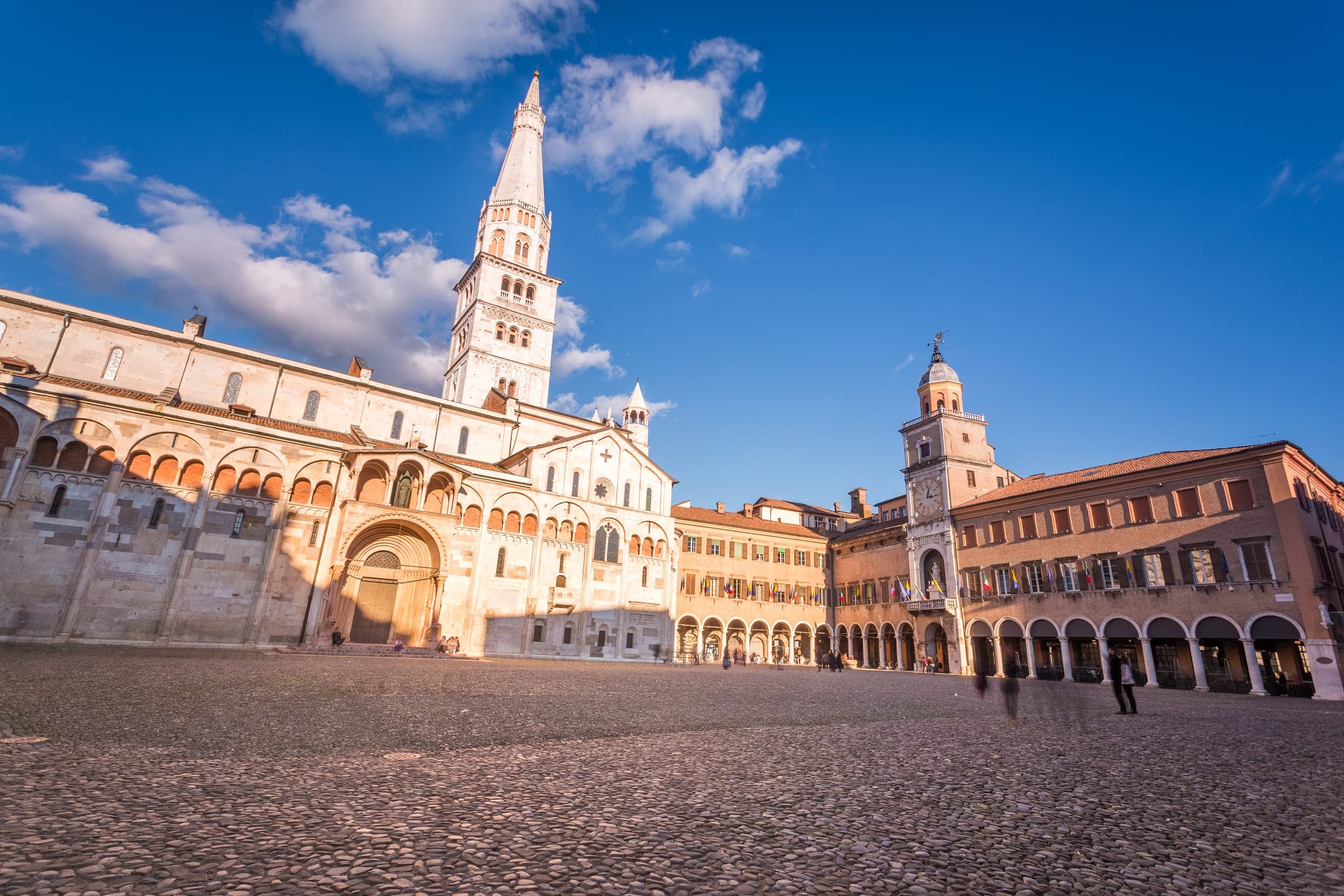
Modena's limited traffic zone runs 24 hours a day. Who may enter, how guests staying in the centre get a permit, where to park, and what a fine really costs.
The fine does not arrive while you are still in Italy. That is what makes Italian restricted zones so expensive for visitors: you drive past a camera without noticing, finish your holiday, fly home — and months later a notice lands in your letterbox, in Italian, for something you cannot remember doing. If the car was a rental, your card was charged an administration fee long before that.
This guide explains what a ZTL is, where Modena's starts, who may drive in, how guests staying in the centre get a permit, where to leave the car if you do not have one, and what to do if a fine has already found you. Checked against the City of Modena and Visit Modena sources in August 2026 — rules and tariffs change, so confirm at the source before a decision that costs money.
What a ZTL is
ZTL stands for zona a traffico limitato: a limited traffic zone that only authorised vehicles may enter. Nearly every Italian historic centre has one, and they exist because these streets were laid out for carts, not cars.
Enforcement is automatic. Cameras at each entry point read every number plate and check it against the list of authorisations. Nobody flags you down, no barrier stops you, and nothing on the dashboard lights up. The absence of any reaction at the moment you drive in means precisely nothing.
Modena's zone covers the historic centre inside the ring of boulevards that follows the line of the old walls. The boulevards themselves — viale Vittorio Veneto, viale Martiri della Libertà, viale Monte Kosica and the rest — are outside; the streets they enclose are inside. There are around thirteen main entry points.
The difference that catches people out: no hours
In many Italian cities a ZTL is active in windows — mornings, or weekdays, or 7am to 8pm — and outside those hours anyone may drive in. Rome and Florence work like that, and visitors arrive assuming Modena does too.
It does not. Modena's ZTL is active 24 hours a day, seven days a week. There is no quiet Sunday morning, no free late evening, no 1am exception. If you take one thing from this page, take that.
Streets closed even to permit holders
A detail that surprises people who do hold a permit: a few streets in the centre are reserved lanes for public transport and stay closed even to vehicles authorised for the ZTL:
- via Emilia Centro, between vicolo Squallore and via Torre
- corso Duomo
- piazza Roma
A permit is not a universal pass inside the walls. If your navigation app points you down one of these, ignore it and go around.
What a fine costs, and when it finds you
Unauthorised entry is penalised under article 7, paragraph 14 of the Italian highway code: an administrative fine of €83 to €332, plus notification costs. Two useful facts:
- It carries no licence points. As Italian motoring offences go, it is administrative rather than serious.
- Paying within five days of notification earns a 30% reduction on the penalty. Notification costs are not discounted.
Now the part that matters if you live outside Italy. Authorities have 360 days to notify someone resident abroad. With a rental car the clock effectively starts later still, because the rental company must first be asked for your details and then supply them — a process that can take months on its own. A violation committed in May can reach you the following spring, and in the worst cases around a year and a half later.
And one more thing worth knowing before you decide to "just drive in and see": each camera pass is a separate violation. Driving in and out again is two, not one. Several notices arriving weeks apart from a single afternoon is normal and lawful.
If you were driving a rental car
The notice goes first to the rental company, as the registered keeper. The company identifies you to the authority and, almost always, charges an administration fee to the card you rented with — typically tens of euros, entirely separate from the fine. The fine itself is then served on you afterwards.
This is why a wrong turn in an Italian city centre nearly always costs more than the number printed on the notice.
Who is allowed in
Several categories hold permits — residents, businesses inside the zone, deliveries, vehicles serving people with disabilities, emergency services. For a visitor, there are two realistic routes.
Route one: a temporary paid permit. The municipality issues temporary authorisations, from one day up to six months, through a dedicated online portal, and one-day permits are issued in real time. There is a catch that stops most foreign visitors cold: logging in requires SPID, an Italian electronic identity card (CIE) or a CNS. Those are credentials for people with an Italian tax and residency footprint. You cannot obtain them as a tourist.
Route two, which is the one that applies to almost every visitor: the place you are staying does it for you.
Staying inside the zone: how the permit actually works
This is the part nobody explains, and the reason an apartment inside the ZTL is an advantage rather than a problem.
Vehicles belonging to guests of accommodation businesses based inside the ZTL — hotels, B&Bs, guest houses, holiday apartments — are allowed to enter. The mechanism:
- The property reports the vehicle's details to the municipal police, either before you enter or within 48 hours of entry. The guest does not file anything; the host does.
- You display the permit — the contrassegno — on the windscreen.
- With it you may park in the nearest permitted bays, without paying for parking and beyond the normal time limits.
Point three is the one with real money in it: inside the centre, authorised parking with the permit is free, while everyone else pays for a space for every day of their stay.
The municipal police answer on +39 059 20314 and at ztltemporaneo@comune.modena.it.
How we handle it
Two of our four apartments are inside the zone — the one on Piazza Mazzini and the one on via De' Correggi, steps from Osteria Francescana. The other two sit on the boulevards, outside, where the question does not arise.
For guests staying at the two inside, we handle the pass: €10 per day. We need your number plate and dates — send them on WhatsApp when you book — and it is registered before you arrive. With the pass active you drive in, unload at the door, and leave the car in the nearest permitted bays without paying for parking.
We are not inventing a service: this is the channel the municipality provides for accommodation businesses. Somebody simply has to operate it, and without Italian digital ID that somebody cannot be you.
And the thing we say even though it sells one pass fewer: if you do not need a car in the city, you do not need the pass. Modena's centre crosses on foot in about fifteen minutes, it is completely flat, and everything you came to see is inside that circle. The pass earns its keep if you arrive by car and want it close, or if you are driving out to Maranello, the hills or a balsamic producer.
Where to park without a permit
The answer we give every guest who drives is the Parcheggio del Centro, underground beneath Parco Novi Sad:
- 1,720 spaces on two underground levels
- staffed, open 24 hours
- entrances at via Achille Fontanelli 18 (at the lights on Corso Cavour) and viale Monte Kosica
- about ten minutes' walk from the cathedral, with pedestrian exits into the park
- €1.50 an hour from 6am to 8pm, €0.50 an hour from 8pm to 6am, one-hour minimum with the first fifteen minutes free
It is outside the zone, so you reach it with no permit at all. Around the centre there is also plenty of blue-bay street parking, cheaper the further out you go.
How to recognise an entry point
On a map the boundary looks obvious. Driving, it is not — the change from outside to inside can be an ordinary junction. Three things mark a gate, and it is worth training your eye:
- The sign, reading zona a traffico limitato, placed before the entrance.
- An electronic panel, where fitted, showing whether the gate is active.
- The camera above the road, aimed at plates coming in.
If you spot the sign only once you are past it, do not reverse and do not turn around in the street: it is more dangerous than the fine, and the plate has been read either way. Carry on, leave the zone, and if you are staying in the centre tell your host immediately — the report to the municipal police can be filed within 48 hours of entry, so in many cases it can still be sorted out.
The mistakes that cost the most
- Trusting the navigation app. It does not know where the gates are and will not warn you. Set the car park as your destination, not the address of your accommodation.
- Assuming night is fine. Twenty-four hours a day, seven days a week. One in the morning is inside the hours.
- Popping in "just to drop the bags". There is no courtesy window: the camera reads the plate on entry and does not measure how long you stay.
- Sending your plate late. The report has a 48-hour window from entry. After that the authorisation cannot be registered.
- Changing cars without saying so. The permit is tied to a plate. Arrive in a different vehicle and the system sees an unauthorised one.
- Assuming your accommodation is outside. In central Modena the difference can be one street. Ask before booking, and ask in writing.
I already have a fine — now what?
First: wait for the actual notice. If you rented, the rental company's charge is not the fine — it is the fee for identifying you. The penalty comes separately, later.
When it arrives you have three options: pay within five days with the 30% reduction, pay within sixty days at full value, or appeal within sixty days to the Prefect or the Justice of the Peace.
An appeal is worth it when there is a real defect: notification served outside the legal deadline, missing or non-compliant signage at the gate, or a permit you genuinely held that was not registered. If you simply drove in without authorisation and the signs were there, the realistic move is to pay quickly and take the discount. Paying from abroad is normally possible by bank transfer with the details printed on the notice.
If the fine relates to a stay with us and you had an active pass, send it over: we hold the record of the plate and dates and can help you show it.
Staying somewhere you never need the car
The simplest way to avoid all of this is to not need a car at all: sleep inside the centre and walk. Our apartments are all in the historic centre, minutes from the cathedral, the Albinelli market and the restaurants we recommend.
You book directly with us, with no platform commission, and before you arrive we tell you exactly whether your apartment is inside or outside the zone, where to stop to unload, where to leave the car — and, if you need it, we register the pass. It is one of the most common questions we get, and we would rather answer it in advance than afterwards.
See our apartments in Modena, or read where to stay in Modena if you are still choosing an area.
If you are driving and need the pass, those are the two inside the walls: the penthouse on Piazza Mazzini and the apartment on via De' Correggi. If you would rather not think about it at all, Modena Prestige and Vista Ghirlandina sit on the boulevards, outside the zone.
Read before you drive
If you are still planning the journey, getting to Modena compares the airport shuttle, the train, taxis and driving with real costs and times — including why, most of the time, you do not need a car at all. Then: what to see in Modena, where to eat, and the balsamic producer guide, which is the one trip a car genuinely helps with.
Frequently asked questions
What is a ZTL in Italy? ZTL stands for zona a traffico limitato — a limited traffic zone that only authorised vehicles may enter. Almost every Italian historic centre has one. Entry points are monitored by cameras that read every number plate and check it against the list of permits, so there is no police officer to stop you and no warning at the time: the fine simply arrives later.
What are the hours of Modena's ZTL? There are none. Modena's ZTL is active 24 hours a day, every day of the week, which differs from cities where the zone only closes during certain windows. There is no early Sunday morning and no late evening when you can drive in without a permit.
How much is a ZTL fine in Modena? Unauthorised entry is penalised under article 7 of the Italian highway code with an administrative fine of €83 to €332, plus notification costs. It carries no licence points. Paying within five days of notification earns a 30% reduction on the penalty itself, though notification costs stay.
How long does a ZTL fine take to arrive if I live abroad? Longer than most people expect. Italian authorities have 360 days to notify a resident abroad, and with a rental car the clock only starts once the rental company hands over your details — which can itself take months. A violation in May can reach your letterbox the following spring, and in extreme cases up to a year and a half later.
Can I drive in if I have booked an apartment inside the zone? Yes. Vehicles belonging to guests of accommodation inside the ZTL may enter: the property reports your plate to the municipal police, either before you arrive or within 48 hours of entry. You display the permit on the windscreen and may then park in the nearest permitted bays, without paying for parking and beyond the usual time limits.
Can I get a ZTL permit myself as a tourist? In practice, no. Temporary permits are issued through the municipality's online portal, and logging in requires SPID, an Italian electronic ID card or a CNS — credentials you cannot obtain as a visitor. This is why the permit has to come through the place you are staying.
Where should I park if I have no permit? The underground Parcheggio del Centro beneath Parco Novi Sad: 1,720 spaces, staffed and open 24 hours, entrances at via Fontanelli 18 and viale Monte Kosica, five minutes' walk from the cathedral. It costs €1.50 an hour from 6am to 8pm and €0.50 overnight, and it sits outside the zone. Street parking in blue bays gets cheaper the further out you go.
Does one permit cover every street in the centre? No. A few streets are reserved lanes closed even to vehicles with a ZTL permit: via Emilia Centro between vicolo Squallore and via Torre, corso Duomo, and piazza Roma. Holding a permit is not a licence to drive anywhere inside the walls.
Frequent questions
What readers ask us most.
What is a ZTL in Italy?
ZTL stands for zona a traffico limitato — a limited traffic zone that only authorised vehicles may enter. Almost every Italian historic centre has one. Entry points are monitored by cameras that read every number plate and check it against the list of permits, so there is no police officer to stop you and no warning at the time: the fine simply arrives later.
What are the hours of Modena's ZTL?
There are none. Modena's ZTL is active 24 hours a day, every day of the week, which differs from cities where the zone only closes during certain windows. There is no early Sunday morning and no late evening when you can drive in without a permit.
How much is a ZTL fine in Modena?
Unauthorised entry is penalised under article 7 of the Italian highway code with an administrative fine of €83 to €332, plus notification costs. It carries no licence points. Paying within five days of notification earns a 30% reduction on the penalty itself, though notification costs stay.
How long does a ZTL fine take to arrive if I live abroad?
Longer than most people expect. Italian authorities have 360 days to notify a resident abroad, and with a rental car the clock only starts once the rental company hands over your details — which can itself take months. A violation in May can reach your letterbox the following spring, and in extreme cases up to a year and a half later.
Can I drive in if I have booked an apartment inside the zone?
Yes. Vehicles belonging to guests of accommodation inside the ZTL may enter: the property reports your plate to the municipal police, either before you arrive or within 48 hours of entry. You display the permit on the windscreen and may then park in the nearest permitted bays, without paying for parking and beyond the usual time limits.
Can I get a ZTL permit myself as a tourist?
In practice, no. Temporary permits are issued through the municipality's online portal, and logging in requires SPID, an Italian electronic ID card or a CNS — credentials you cannot obtain as a visitor. This is why the permit has to come through the place you are staying.
Where should I park if I have no permit?
The underground Parcheggio del Centro beneath Parco Novi Sad: 1,720 spaces, staffed and open 24 hours, entrances at via Fontanelli 18 and viale Monte Kosica, five minutes' walk from the cathedral. It costs €1.50 an hour from 6am to 8pm and €0.50 overnight, and it sits outside the zone. Street parking in blue bays gets cheaper the further out you go.
Does one permit cover every street in the centre?
No. A few streets are reserved lanes closed even to vehicles with a ZTL permit: via Emilia Centro between vicolo Squallore and via Torre, corso Duomo, and piazza Roma. Holding a permit is not a licence to drive anywhere inside the walls.
Stay in the centre, see Modena on foot.
All our apartments are inside the historic centre: step out of the door and you are already in the middle of what you have just read about. No restricted-traffic zone to decode, no parking to hunt for every morning.